


The best eSIM for Africa depends on your route. Visiting several countries? Pick a regional Africa eSIM that lists every country on your trip, so you buy and install just one. Staying in one country, like Egypt or South Africa? A single-country eSIM usually gives you more data for your money and longer plans. One honest warning before you buy: no regional plan covers the whole continent, and signal outside cities and main roads can be patchy. This guide shows which countries our Africa eSIM covers, when a country plan is the better pick, and how to stay connected on safari.
Here are the two kinds of plans side by side. All three have 10 GB for 7 days, so the only difference is where they work.
Africa (30 countries) · Egypt only · South Africa only · all data only · See all Africa eSIMs or browse every destination
Which eSIM do you need for Africa?
Start with the countries on your route. Each plan lists its countries on the plan page, and the eSIM only works in those countries.
Visiting two or more African countries
Get a regional Africa eSIM, as long as every country on your route is on its list. Your data and days are shared between the countries, so you don't need a new eSIM at each border. This suits a safari in Kenya and Tanzania, a gorilla trek in Rwanda and Uganda, or a business trip from Lagos to Accra.
Visiting only one country
A single-country eSIM is usually the better deal. Compare the cards above: for the same data and days, a country plan often costs less than the regional plan. Country plans for some destinations also come in bigger sizes for longer stays, up to 50 GB for 30 days or more. Popular ones: Egypt, Morocco, South Africa, Kenya, Tanzania and Nigeria.
Mostly one country, with a short side trip
Your phone can hold more than one eSIM. So you can pair a bigger country plan for your main stay with a small Africa plan for a few days next door. Switch your mobile data line when you cross the border.
Countries the Africa plan doesn't cover
Our Africa eSIM doesn't include Namibia, Zimbabwe, Mozambique, Cabo Verde, Seychelles, Cameroon, Eswatini or Lesotho, among others. For some of these we sell a country plan, like Mozambique and Cabo Verde. For others we have no plan right now. Check our destinations for each country before you build your trip around one eSIM.
Which countries does our Africa eSIM cover?
The SimOptions Africa eSIM works in these 30 countries, grouped by region:
- North Africa: Algeria, Egypt, Morocco, Tunisia.
- West Africa: Benin, Burkina Faso, Gambia, Ghana, Ivory Coast, Mali, Niger, Nigeria, Senegal, Sierra Leone.
- Central Africa: Chad, Congo, Democratic Republic of the Congo, Gabon.
- East Africa: Ethiopia, Kenya, Rwanda, Tanzania, Uganda.
- Southern Africa and the islands: Botswana, Madagascar, Malawi, Mauritius, Reunion, South Africa, Zambia.
The list can change, so check the countries on the plan card on the Africa eSIM page before you pay.
What to look for in an eSIM for Africa
Whichever provider you choose, check these before you buy:
- Every country on your route: regional plans cover a list of countries, not the whole continent. Read the list, don't assume.
- Enough days: pick a plan whose validity covers your trip, or one you can top up.
- Enough data: maps, ride apps, photo uploads and video calls add up. See the sizing guide below.
- Top-ups: if you can add data to the same eSIM, you can start smaller.
- Hotspot: handy for a laptop or a travel partner's phone. Some unlimited plans cap how much you can share.
- Phone number: most travel eSIMs for Africa are data only. You keep your home number on your phone for texts.
Our Africa eSIM: the details
Here is what the plan details on our Africa eSIM page say:
- Countries: 30, listed above, on one eSIM.
- Data and days: 1 GB or 3 GB for 3 days, 5 GB or 10 GB for 7 days, and 20 GB for 15 days.
- Phone number: no. Data only, no calls or SMS.
- Speed: 4G/LTE.
- Top-ups: available.
- Hotspot: allowed.
- Activation: once installed, the eSIM activates automatically when you arrive in a covered country. Your days start then, not when you buy. If you don't use it within a year of buying it, it expires.
Because these plans are data only, keep your usual SIM or eSIM on for calls and texts. Most eSIM phones can run two lines at once (Apple: Using Dual SIM with an eSIM). You still get bank codes and texts from home, while the travel eSIM handles data. To call over data, see how to make calls with a data-only eSIM.
How good is mobile coverage in Africa?
Good in cities and along main roads, patchy in many rural areas and parks. Here is what the GSMA, the mobile industry's association, reports (GSMA: State of Mobile Internet Connectivity 2025):
- Sub-Saharan Africa has the largest coverage gap of any region: about 10% of people live where there is no mobile internet at all.
- About three quarters of people in Sub-Saharan Africa live in an area with 4G coverage.
- 3G is still the main network technology in much of the region.
- Rural coverage lags well behind cities. In Nigeria, the gap is 11% overall but 36% in rural areas.
These figures count people, not land. Wide savannahs, deserts and mountain parks have few people, so they often have weak signal or none. No eSIM can fix that, because every eSIM uses the same local towers. What helps:
- Download offline maps before you leave town (Google Maps Help: offline maps).
- Use lodge or camp Wi-Fi for big uploads and backups, and save your data for maps and messages.
- Don't rely on your phone alone in remote areas. Tell your guide or lodge your plans, and carry your bookings and emergency numbers offline.
Popular trips in Africa and which eSIM fits
A few common routes, with a connection tip for each. Before you go anywhere, check your government's travel advice, for example UK FCDO travel advice.
Egypt and the Pyramids of Giza
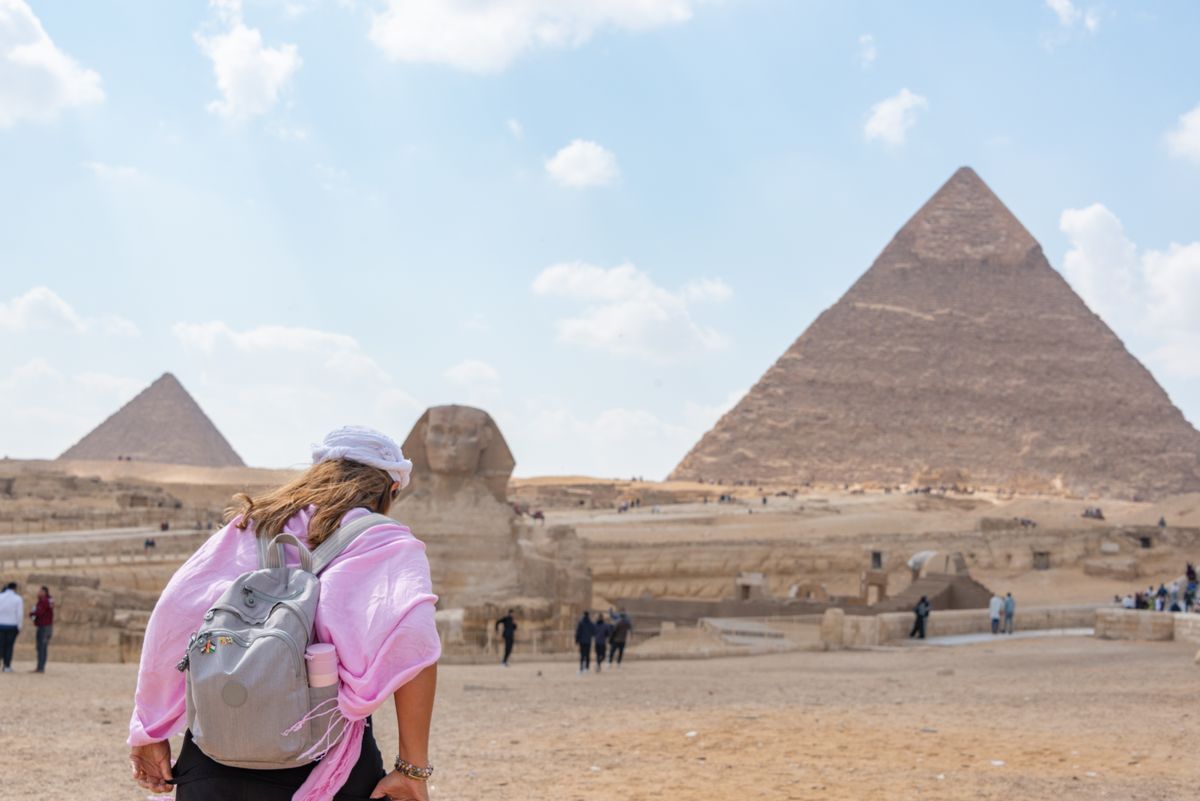
Cairo, the Pyramids of Giza, Luxor and the Red Sea resorts are some of Africa's busiest travel spots. Egypt is on the Africa plan, but if Egypt is your only stop, an Egypt eSIM is the simpler pick. More options in our guide to the best eSIM for Egypt. Our advice when visiting the pyramids: go early, carry water, and save your tickets and maps offline, because the site gets crowded and hot.
Morocco
Marrakech, Fes and Chefchaouen are a short flight from Europe. Morocco is on the Africa plan, and a Morocco eSIM on its own works well for a one-country trip. Expect weaker signal in the Atlas Mountains and the Sahara.
South Africa

Cape Town, the Garden Route and Kruger National Park are often done in one trip. For South Africa only, a South Africa eSIM has bigger plans for road trips, and our guide to the best eSIM for South Africa helps you pick. Adding Botswana or Zambia? Use the Africa plan. Adding Namibia, Zimbabwe, Eswatini or Lesotho? The Africa plan doesn't cover those, so plan for that part of the route.
Safari in Kenya and Tanzania
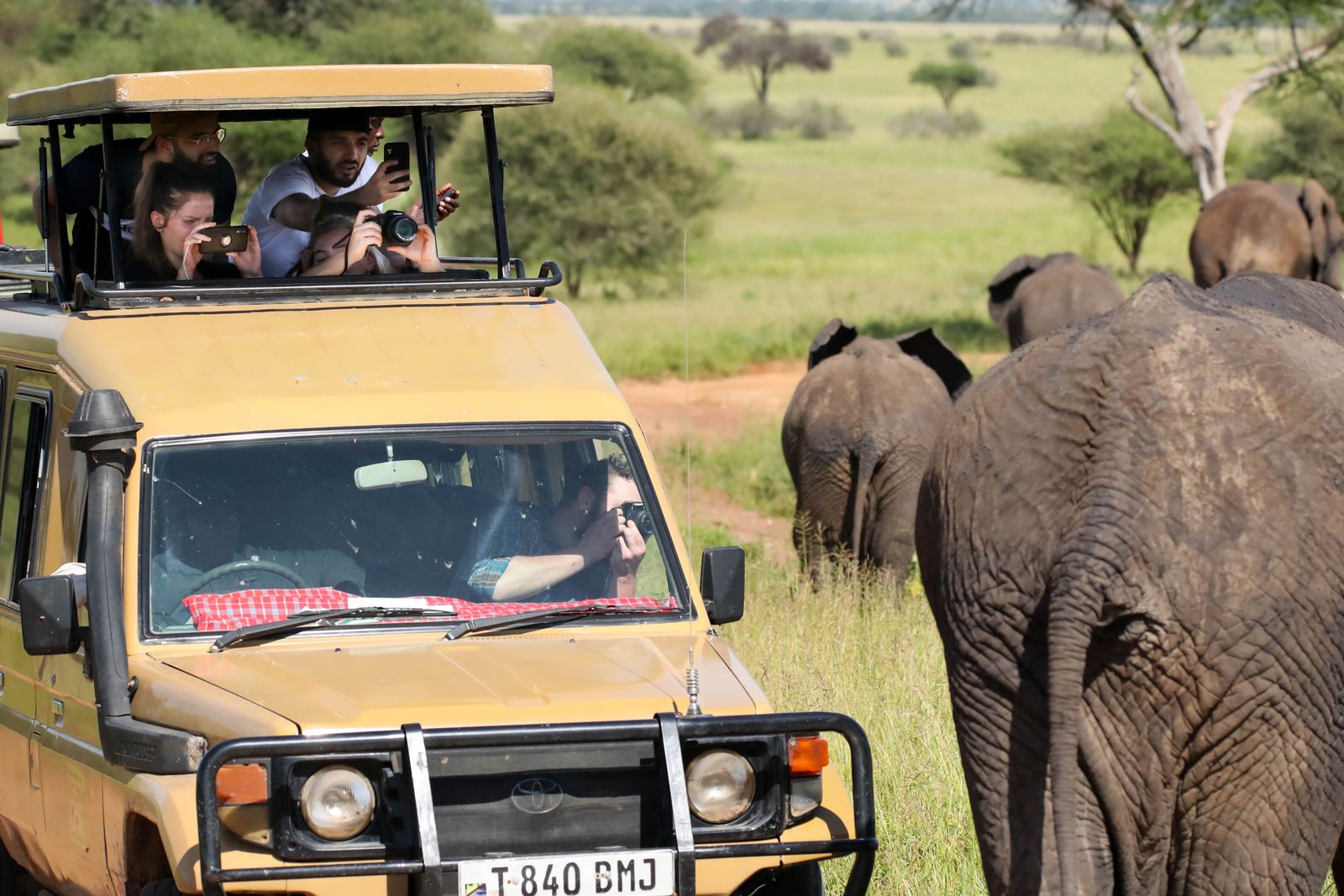
The Maasai Mara, the Serengeti, Kilimanjaro and Zanzibar are the classic East Africa trip. Kenya and Tanzania are both on the Africa plan, so one eSIM covers a cross-border safari. Expect signal around towns and many lodges, and gaps out on game drives. For Kenya only, see our guide to the best eSIM for Kenya.
Gorilla trekking in Rwanda and Uganda
Rwanda and Uganda are both on the Africa plan, which makes it a good fit for a trip that combines Kigali with Uganda's parks. Signal in the forest is limited, so download what you need before the trek.
West Africa: Nigeria, Ghana and Senegal
Lagos, Accra and Dakar are all on the Africa plan, along with seven more West African countries. That makes it the easy choice for a business trip across the region. Staying in one place? A Nigeria eSIM or Ghana eSIM may suit you better. More in our guide to the best eSIM for Nigeria. Parts of northern Nigeria are under "against all travel" advice from the UK (FCDO: Nigeria).
Victoria Falls
The falls sit on the border between Zambia and Zimbabwe. Zambia is on the Africa plan, Zimbabwe isn't. Near the border, your phone can pick up a Zimbabwean network, which the Africa plan won't use. If you cross to the Zimbabwe side, plan for no data from the Africa eSIM there.
Ethiopia and the DR Congo: check the travel advice first
Travel warning
Both countries are on the Africa plan, but some of their best-known sights are in regions where the UK advises against all travel. In Ethiopia, that's the whole Amhara region, home to Lalibela and the Simien Mountains (FCDO: Ethiopia). In the DR Congo, it includes North Kivu, where Virunga National Park is (FCDO: DR Congo). Read the latest advice for your own country before you book.
Heading to the coast or the Indian Ocean instead? See the best islands to visit in Africa. Mauritius, Madagascar and Reunion are on the Africa plan.
How much data do you need?
It depends on how long you stay and how you use your phone. As a rough guide:
- 3 to 5 days: 1 GB to 5 GB, for maps, messages and some browsing.
- 7 to 15 days: 10 GB to 20 GB, enough for daily maps, social media, ride apps and some video calls.
- Longer than 15 days: top up the Africa plan as you go, or pick a country plan that runs for 30 days or more if you stay in one country.
Doing a two-week trip through several countries, like a safari followed by a few days on Zanzibar? The 20 GB Africa plan lasts 15 days, and you can top up if you run low.
Do you need a travel eSIM? Check your home plan first
Some home plans include roaming in a few African countries, others charge a daily fee or by the MB. Check what your carrier charges in each country on your route and add up your days. If it's a daily fee, a prepaid eSIM gives you data at a fixed price instead, while your home number stays on your phone. Just turn off data roaming on your home line so it can't use data abroad. More tips in our guide on how to avoid roaming charges.
Before you buy: check your phone and set it up
- Check eSIM support. Dial *#06#. If your phone shows an EID number, it supports eSIM. On iPhone, eSIM works on the iPhone XS, XS Max, XR and later (Apple: Using Dual SIM with an eSIM).
- Check that your phone is unlocked. A phone locked to a carrier only accepts that carrier's eSIMs.
- Install the eSIM at home on Wi-Fi before you leave. On iPhone, scan the QR code with the Camera app, or on iOS 17.4 and later press and hold the code in the email and choose Add eSIM (Apple: Set up eSIM on iPhone). Step by step for iPhone and Android: how to install an eSIM.
- When you land, pick the travel eSIM for mobile data and turn on data roaming for it. On iPhone, go to Settings > Cellular (or Mobile Data) > Cellular Data and choose the travel eSIM.
- Turn off data roaming on your home line, so it can't use data abroad.
No signal after you arrive? Our guide on what to do when your eSIM is not activating walks you through the usual causes.
Other eSIMs for Africa
SimOptions isn't your only choice. Here is what two other providers say on their own pages:
- Airalo sells an Africa regional eSIM that it lists for 36 countries and networks, with fixed data packages from 3 to 30 days. It says top-ups are available in many cases (Airalo: Africa eSIM).
- Holafly sells unlimited data plans for Africa and lists 28 countries. It says a fair usage policy can reduce your speed for up to a day, you can share 1 GB per day as a hotspot, and there's no phone number (Holafly: Africa eSIM).
Each provider covers a different list of countries, so compare the lists with your route first, then the data, days and hotspot rules.
FAQs
What is the best eSIM for Africa?
The one that covers every country on your route. For a multi-country trip, a regional Africa eSIM like ours (30 countries) means one eSIM for the whole trip. For a single country, a country eSIM usually gives you more data for your money.
Is there one eSIM that works in all of Africa?
Not that we know of. Regional plans cover a list of countries: ours covers 30, and other providers list between about 28 and 36. Check that every country you'll visit is on the list.
What is the best eSIM for East Africa?
Our Africa eSIM covers Kenya, Tanzania, Uganda, Rwanda and Ethiopia, so one plan works for a safari that crosses borders. For one country only, a Kenya or Tanzania eSIM is the simpler pick.
What is the best eSIM for West Africa?
Our Africa eSIM covers ten West African countries, including Nigeria, Ghana, Senegal and Ivory Coast. It doesn't cover Togo, Liberia, Guinea or Cabo Verde, so check your route first.
Will my eSIM work on safari?
Around towns, main roads and many lodges, usually yes. Out on game drives and in remote parks, signal is often weak or missing, whichever eSIM or SIM you use. Download maps and anything you need before you head out.
Do these eSIMs come with an African phone number?
No. Our Africa and country plans are data only. Keep your home number on your phone for texts, and use apps like WhatsApp or FaceTime for calls.
Can I use an Africa eSIM for a long stay?
Our Africa plans run for up to 15 days, and you can top up. If you stay longer in one country, a country plan with 30 days or more is often a better fit.
When does my eSIM start counting days?
The plan activates automatically when you arrive in a covered country, so your days start on arrival, not when you buy or install it.