


The best eSIM for the Caribbean depends on your trip. Hopping between islands or going on a cruise? Pick a regional Caribbean eSIM that lists every island on your route, so you install one eSIM and stay online at each port. Staying on one island, like Jamaica or the Dominican Republic? A single-island eSIM usually costs less for the same data. Going to Guadeloupe, Martinique or the French side of Saint Martin? A French plan with a phone number can be the better deal. This guide shows which islands our Caribbean eSIM covers, which ones it misses, and how to avoid expensive ship roaming on a cruise.
Here are the two kinds of plans side by side. All three have 5 GB, so you can compare how long they last and where they work.
Caribbean (30 islands and territories) · Dominican Republic only · Jamaica only · all data only · See all Caribbean eSIMs or browse every destination
Which eSIM do you need for the Caribbean?
Start with the islands on your route. Each plan lists its countries on the plan card, and the eSIM only works there.
Island hopping or a Caribbean cruise
Get a regional Caribbean eSIM, as long as every stop is on its list. Your data is shared between the islands, so you don't need a new eSIM at each port. The 3 GB and 5 GB plans also run for 30 days, which suits a long cruise or a slow island-hopping trip.
One island only
A single-island eSIM is usually the better deal. For the same 5 GB, the Jamaica and Dominican Republic plans on the cards above cost about half as much as the regional one, though they run for 7 days instead of 30. Many island plans also go up to 20 GB for 15 days. Popular ones: Jamaica, Dominican Republic, Puerto Rico, Bahamas, Barbados and Saint Lucia.
Guadeloupe, Martinique, Saint Barthélemy and Saint Martin
These islands are part of France. Our Bouygues Telecom plans cover all four, plus France and most of Europe. Unlike our other Caribbean plans, they come with a French (+33) phone number for calls and texts. If you're visiting the French Caribbean, or flying in via Paris, this plan covers both legs of the trip.
One catch: the Bouygues plans cover the French side, Saint Martin, but not Sint Maarten, the Dutch side of the same island. The regional Caribbean plan covers both.
The USA and the Caribbean on one trip
There's no single plan of ours for both. Your phone can hold more than one eSIM, so pair a USA eSIM for the mainland with a Caribbean or island eSIM, and switch your data line when you land. Puerto Rico and the US Virgin Islands are US territories, but our USA plan doesn't list them, so use the Caribbean or Puerto Rico plan there. If you have a US phone plan, check it first: some US carriers treat these two territories like home.
Which islands does our Caribbean eSIM cover?
The SimOptions Caribbean eSIM (1 GB, 3 GB and 5 GB plans) lists these 30 islands and territories:
- Greater Antilles: Cayman Islands, Cuba, Dominican Republic, Haiti, Jamaica, Puerto Rico.
- Virgin Islands and the Leeward Islands: Anguilla, Antigua and Barbuda, British Virgin Islands, Guadeloupe, Montserrat, Saint Barthélemy, Saint Kitts and Nevis, Saint Martin, Sint Maarten, US Virgin Islands.
- Windward Islands and the south: Barbados, Dominica, Grenada, Martinique, Saint Lucia, Saint Vincent and the Grenadines, Trinidad and Tobago.
- The ABC islands: Aruba, Bonaire, Curaçao, plus "Netherlands Antilles" as a separate entry.
- In the Atlantic: Bahamas, Bermuda, Turks and Caicos Islands.
The 10 GB plan covers a shorter list of 18. It leaves out Aruba, Bermuda, Bonaire, Cuba, Curaçao, Haiti, Martinique, Montserrat, Saint Barthélemy, Saint Martin, Sint Maarten and the US Virgin Islands. If any of those are on your route, pick a smaller plan and top up. The lists can change, so check the countries on the plan card on the Caribbean eSIM page before you pay.
What the Caribbean plan doesn't cover
- Western Caribbean cruise ports: Cozumel and Costa Maya (Mexico), Roatán (Honduras) and Belize City aren't on the list. Add a Mexico, Honduras or Belize eSIM if your ship stops there.
- The Caribbean coast of the mainland: Cancún, Costa Rica, Panama and Colombia need their own plans, see our destinations.
- Your home port: Miami, Fort Lauderdale or Port Canaveral are in the USA, which the Caribbean plan doesn't cover.
Some islands also have no single-island plan from us right now, including Aruba, Bonaire, Bermuda, Haiti and the US Virgin Islands. For those, the regional plan is the way to go.
What to look for in an eSIM for the Caribbean
Whichever provider you choose, check these before you buy:
- Every island on your route: no regional plan covers every island. Lists differ a lot between providers, so read them, don't assume.
- Enough days: a 7-day plan won't last a 10-night cruise. Pick a plan whose validity covers your trip, or one you can top up.
- Enough data: maps, photo uploads and video calls add up. See the sizing guide below.
- Top-ups: if you can add data to the same eSIM, you can start smaller.
- Phone number: most Caribbean travel eSIMs are data only. You keep your home number on your phone for texts.
- Cruise use: a travel eSIM works on land networks at port. It doesn't work on the ship's own network at sea.
Our Caribbean eSIM: the details
Here is what the plan details on our Caribbean eSIM page say:
- Islands: 30 on the 1 GB, 3 GB and 5 GB plans, 18 on the 10 GB plan.
- Data and days: 1 GB for 7 days, and 3 GB, 5 GB or 10 GB for 30 days.
- Phone number: no. Data only, no calls or SMS.
- Speed: 4G/LTE.
- Top-ups: available.
- Activation: once installed, the eSIM activates automatically when you arrive in a covered country. Your days start then, not when you buy. If you don't use it within a year of buying it, it expires.
Because the plan is data only, keep your usual SIM or eSIM on for calls and texts. Most eSIM phones can run two lines at once (Apple: Using Dual SIM with an eSIM). You still get bank codes and texts from home, while the travel eSIM handles data. More on this in how to set up and manage a dual eSIM.
Using an eSIM on a Caribbean cruise

On a cruise, your phone can connect to two very different kinds of network:
- At sea: the ship runs its own maritime mobile network. Your home carrier bills this as cruise or maritime roaming, usually at much higher rates than normal roaming. AT&T, for example, sells a separate Cruise Day Pass for use on included ships, and its terms say this applies when the ship is 6 or more nautical miles from land. Without it, you pay per MB (AT&T: Cruise Day Pass terms). No travel eSIM works on the ship's network.
- In port: close to land, your phone picks up the island's local networks. This is where a Caribbean eSIM gives you data at a fixed price, for maps, ride apps, messages and photos.
How to set your phone up for a cruise:
- Install the Caribbean eSIM at home, on Wi-Fi, before you board.
- Turn off data roaming on your home line, so it can't use data at sea or in port.
- At sea, use the ship's Wi-Fi package or switch on airplane mode and turn Wi-Fi back on. More in our guide to airplane mode.
- In port, set the Caribbean eSIM as your mobile data line and turn on data roaming for it.
- Before the ship sails, switch airplane mode back on. Calls and texts on your home line can still be billed at cruise rates if your phone joins the ship's network.
Check your itinerary against the plan's list. Eastern and southern Caribbean routes (the Bahamas, the Virgin Islands, Sint Maarten, Antigua, Barbados, Saint Lucia) are well covered. Western Caribbean routes often stop in Mexico, Honduras or Belize, which need a separate eSIM.
Popular islands and which eSIM fits
A few favorite islands, with a connection tip for each. Before you go, check your government's travel advice, for example UK FCDO travel advice. Want more island ideas? See the best islands to visit in North America, which includes Puerto Rico.
British Virgin Islands
The BVI is a group of more than 60 islands and cays, popular for sailing, snorkeling and diving. Cane Garden Bay on Tortola is one of the best-known beaches. If you sail between the BVI and the US Virgin Islands, the regional plan covers both. Staying on the BVI only? The British Virgin Islands eSIM costs less.
US Virgin Islands
St. Thomas, St. John and St. Croix are the three main islands. About 60% of St. John is part of Virgin Islands National Park (NPS: Virgin Islands National Park). We don't sell a single-island plan here right now, so use the Caribbean eSIM (not the 10 GB plan). Our US Virgin Islands eSIM guide has more.
Saint Lucia
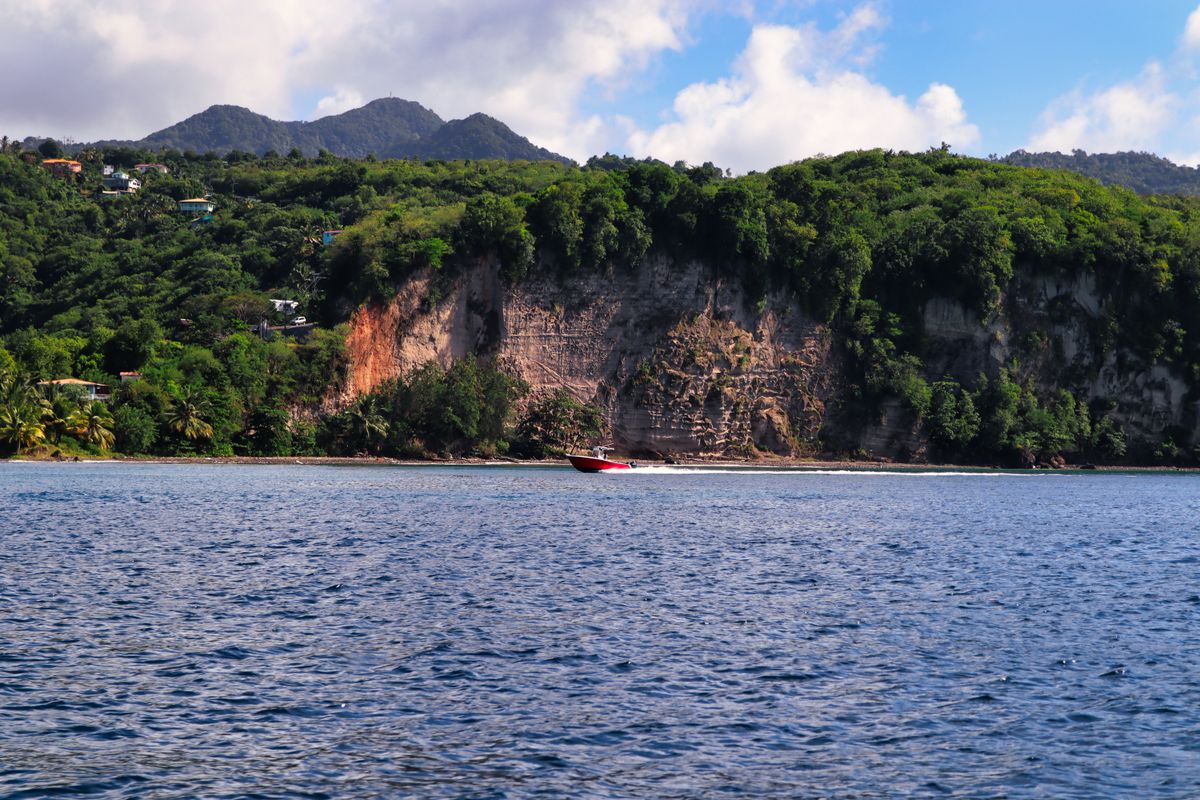
Saint Lucia is known for its rainforest, the twin Pitons and beach resorts, and it's a classic honeymoon pick. Rodney Bay in the north is the hub for restaurants and nightlife. For a stay on Saint Lucia only, the Saint Lucia eSIM is the simpler pick.
Dominican Republic
The Dominican Republic shares the island of Hispaniola with Haiti. Punta Cana and Puerto Plata are the big resort areas, and the capital, Santo Domingo, has a historic Colonial City listed by UNESCO. Resorts often have Wi-Fi, but a Dominican Republic eSIM keeps you online on excursions and in taxis.
Jamaica
Montego Bay, Negril and Ocho Rios are the main beach areas, and Falmouth is a big cruise port. For a resort stay, the Jamaica eSIM goes up to 20 GB for 15 days. More in our Jamaica eSIM guide.
Aruba and Curaçao
Aruba is known for Eagle Beach, Palm Beach and Arikok National Park. Curaçao is next door, with Willemstad's colorful waterfront. Aruba is only on the 1 GB, 3 GB and 5 GB Caribbean plans. For Curaçao, we also sell a Curaçao eSIM.
How much data do you need?
It depends on how long you stay and how you use your phone. As a rough guide:
- A cruise with a few port days: 1 GB to 3 GB, for maps, messages and some photo sharing in port.
- A week on one island: 3 GB to 10 GB, enough for daily maps, social media and some video calls.
- Two weeks or more: 10 GB to 20 GB on an island plan, or top up the Caribbean plan as you go.
Use hotel and resort Wi-Fi for big uploads and backups, and save your data for maps and messages. Download offline maps before you head out (Google Maps Help: offline maps).
Do you need a travel eSIM? Check your home plan first
Some home plans include roaming on a few Caribbean islands, others charge a daily fee or by the MB. Check what your carrier charges for each island on your route, and add up your days. If it's a daily fee, a prepaid eSIM gives you data at a fixed price instead, while your home number stays on your phone. Just turn off data roaming on your home line so it can't use data abroad. More tips in how to avoid roaming charges.
Before you buy: check your phone and set it up
- Check eSIM support. Dial *#06#. If your phone shows an EID number, it supports eSIM. On iPhone, eSIM works on the iPhone XS, XS Max, XR and later (Apple: Using Dual SIM with an eSIM).
- Check that your phone is unlocked. A phone locked to a carrier only accepts that carrier's eSIMs.
- Install the eSIM at home on Wi-Fi before you leave. On iPhone, scan the QR code with the Camera app, or on iOS 17.4 and later press and hold the code in the email and choose Add eSIM (Apple: Set up eSIM on iPhone). Step by step for iPhone and Android: how to install an eSIM.
- When you land, pick the travel eSIM for mobile data and turn on data roaming for it. On iPhone, go to Settings > Cellular (or Mobile Data) > Cellular Data and choose the travel eSIM.
- Turn off data roaming on your home line, so it can't use data abroad.
No signal after you arrive? Our guide on what to do when your eSIM is not activating walks you through the usual causes.
Other eSIMs for the Caribbean
SimOptions isn't your only choice. Here is what two other providers say on their own pages:
- Airalo sells a Caribbean Islands eSIM that it lists for 26 countries and networks, with unlimited data packages from 3 to 30 days.
- Holafly sells an unlimited data plan for the Caribbean that lists 18 destinations. It says a fair usage policy can slow your speed for up to a day, you can share 1 GB per day as a hotspot, and there's no phone number.
Each provider covers a different list of islands, so compare the lists with your route first, then the data, days and hotspot rules.
FAQs
What is the best eSIM for the Caribbean?
The one that covers every island on your route. For island hopping or a cruise, a regional Caribbean eSIM like ours (30 islands and territories) means one eSIM for the whole trip. For a single island, an island eSIM usually gives you more data for your money. For the French islands, a Bouygues Telecom plan adds a French phone number.
Is there one eSIM that works on every Caribbean island?
Not that we know of. Regional plans cover a list of islands, and the lists differ between providers. Ours covers 30 on its smaller plans and 18 on its 10 GB plan. Check that every stop is on the list.
What is the best eSIM for a Caribbean cruise?
A regional Caribbean eSIM that covers all your ports, with enough days for the whole cruise. Ours runs for 30 days on the 3 GB and 5 GB plans. Remember it only works in port, on land networks. At sea, use the ship's Wi-Fi and keep your home line's data roaming off.
Will my phone work at sea on a cruise ship?
It can, through the ship's maritime network, but your home carrier bills that as cruise roaming, often at high rates. No travel eSIM covers it. Turn off data roaming, or use airplane mode with Wi-Fi on.
Is there an eSIM for the USA and the Caribbean?
We don't sell one plan for both. Pair a USA eSIM with a Caribbean or island eSIM on the same phone, and switch your data line as you travel.
Does the Caribbean eSIM work in Cuba?
Cuba is on the list of the 1 GB, 3 GB and 5 GB plans, but not the 10 GB plan. If you're from the US, check the US rules for travel to Cuba before you book (OFAC: Cuba sanctions).
Do these eSIMs come with a local phone number?
Our Caribbean and island plans are data only. Keep your home number on your phone for texts, and use apps like WhatsApp or FaceTime for calls. Only our Bouygues Telecom plans, which cover the French islands, come with a phone number, and it's a French (+33) one.
When does my eSIM start counting days?
The plan activates automatically when you arrive in a covered country, so your days start on arrival, not when you buy or install it.