
Western Europe is one of the most popular and visited areas in the world, but one of the countries you must visit there is the Federal Republic of Germany, commonly known as Germany or Deutschland (in German).
This is a country with more than two millennia of history. Its incredible cities have many places to visit and enjoy the culinary culture with your family or friends.
You can be part of one of the most famous festivals in the whole world, the Oktoberfest celebration, where you can have fun with the breweries (but with responsibility). Read on and learn more about the wonderful places to see on your trip to the German country.

How to get there
It is to be expected that being in this country (one of the most developed and visited in the world), you will find the most modern, comfortable and popular airports in Europe and the world. The first on our list is the Frankfurt am Main Airport, located in Frankfurt. It is the most popular and busiest airport in the country. It is also very accessible; you can get there by car, bus, or train (the airport has two railway stations).
One of the most popular destinations in Germany is Munich. To get there we recommend you the Munich Airport. It is the second busiest airport in the country. Most of the travelers prefer to travel to this airport for the quality of services offered, it also has the best restaurants and a wide range of destinations particularly in Europe.
The third-largest airport in Germany is the Düsseldorf Airport in North Rhine-Westphalia. This is the largest metropolitan area and the most populous state in Germany. In 2019, more than 25.51 million people traveled through this airport to many different destinations.
Visa Information
The need to obtain a visa to enter Germany will depend on your country of origin. Germany is a member of the Schengen Agreement, which allows free passage between some countries of Europe. So if you are in Europe, you will have no problems traveling to Germany.
However, Germany allows citizens of 62 countries around the world free entry if the stay is for a period of up to 90 days. The citizens from the countries that are not included in the program must obtain a visa. We recommend that you do a preliminary search of whether or not your country requires a visa to enter Germany.
Best time to visit the country
Visiting this beautiful country at different times of the year has its advantages. However, most tourists prefer to travel to this country between May and September (the spring and summer seasons), when the temperatures are around 20°C.
Temperatures and weather can also change, so it is suitable to pack waterproof walking shoes, a rain jacket, and sunglasses. If you prefer to avoid the rains, the dry months are from July to September specifically, where the temperature can reach 25°C.
If you decide to visit Germany in winter, you will find very cold weather, with average daily temperatures around 0°C, but in this season all prices drop, making it the cheapest time to enjoy cities and attractions.
Safety
Germany is a very safe country to travel, where laws are enforced and security mechanisms work for the most part. However, just like when you travel to any other country, you should always be aware of your belongings, especially in public places (attractions, festivals, and the bus), since they are the places where pickpockets often catch tourists. Just follow your common sense and do not go there alone at night, nor visit the areas considered conflictive.
Budget
Do you already have an idea about how much you will spend on your trip? If the answer is no, then we will guide you in the way to plan your budget. A traveler can spend on average €107 ($120) on a day. This includes accommodation, meals, and transportation.
So for one week, you can expect to spend around €746 ($837) and for two weeks €1,491 ($1,673). Of course, this information is just to give you an idea and is based on the experiences of other travelers. That is why we recommend you to arrange first, in which hotel you want to stay in the country and ask for the basic services (food for example).
You can also plan from home all the attractions and festivals where you want to go, so the costs of that will be included in your budget too. Remember that planning and researching are always important when you travel, so you can assist to all those cities that you want without running out of money in the middle of your trip.
Take a look at the next list where we show you the average prices of some common items:
- Meal at an inexpensive restaurant: €8 ($8.99) – Maybe a hamburger in McDonald’s
- Mid-range restaurant: €25 ($28.10) – A three-course (including the appetizer, main meal, and dessert)
- Soft Drink: €0.33 ($0.37) – 0.33-liter bottle.
- Beer: €3.50 ($3.93) – 0.5-liter bottle
Currency
The currency used in Germany and most of the European countries is the Euro. Incredibly as it may seem, the most widely used form of payment is cash, the best way to obtain it is by using an ATM. These are located everywhere in Germany (airports, hotels, shopping malls).
Of course, there will be charges for the use of your card at ATMs, so we recommend that you check with your bank first to know the applied rates. Stores in Germany do not accept any currency other than the Euro, so it is always better to have cash euros in your pocket.
The use of credit cards is not very common; actually, most of the stores have a sign at the door that indicates which credit cards are accepted (the most popular ones are MasterCard, Visa, and American Express).
Interesting facts about the culture
When speaking about German culture, it is necessary to mention many different areas, such as traditions, architecture, cuisine, language, and art. For example, there is an event that takes place in Munich in October that is called the Oktoberfest, the world’s largest folk festival. More than 7 million people assist to this festival to enjoy beers, roasted chickens, sausages and pretzels, and many attractions such as amusement rides.
Commonly called “d’Wiesn” is one of the oldest traditions that Germans have. There you probably will see many locals using their traditional costumes. Even though in this event more than 7 million liters of beer are drunk, in the rest of the year it is also consumed a lot, being the most common alcoholic drink in the country.
One of the things that identify Germans, is their passion for sports, specifically soccer. They have been champions of the FIFA World Cup four times, being the last time in 2014.
The official language is German, so maybe it is a good idea to learn one word or two before you arrive in the country. Other languages are also spoken, due to the immigration, such as Danish, Polish, Turkish and Balkan languages.
The signs that best tell the history of the country, are those related to the architecture, such as the palaces, castles, cathedrals, and monuments. Many of them were built between the 15th and 18th centuries, the reason why they have that characteristic medieval touch of the time.
What to do in Germany
Germany has many places to visit, from beautiful natural parks and Castles to modern cities, skyscrapers, and nightlife as in the capital Berlin. That city is the most populous of Germany and Central Europe; it has many art and historical places to offer.
Places to visit in Berlin
- Brandenburg Gate, West Berlin: One of the best-known landmarks of Germany; the gate of the city.
- Reichstag building, in Tiergarten: a beautiful building with green gardens, is the meeting place of the Bundestag (Federal Assembly)
- Berlin Wall Memorial, in Bernauer Street: Commemorative strip of the historical division with a section of the original preserved wall and a monument.
If you are looking for something more active and fun, you must go to Munich. The Bavarian city is known for its annual Oktoberfest celebration and its breweries. In the Altstadt (Old Town), there is the central square Marienplatz where a popular xylophone show recreates stories from the 16th century.
Places to visit in Munich
- Marienplatz, in Central Munich: the city's main square since 1158.
- Englischer Garten, in Northwest Munich: Beautiful 18th-century Park with 78 km of bike paths/trails and a beer yard by the lake.
- Nymphenburg Palace, in Neuhausen-Nymphenburg district: Incredible palace with rococo interiors, carriage display, and large symmetrical baroque gardens.
Another city you must visit is Frankfurt, which is a metropolis and the largest city in the German state of Hesse. With its incredible and modern skyscrapers, medieval buildings, and beautiful views.
Places to visit in Frankfurt
- The Römer, in Altstadt (Old town): It is a medieval building and one of the most important monuments in the city.
- The Main Tower, in Neue Mainzer Street: Huge Glass-fronted skyscraper, with an observatory and a restaurant with city and river views.
- Städel Museum, in Schaumainkai: Exotic art gallery with an important collection of European art spanning from the Middle Ages to the present day.
Another place to visit in Germany:
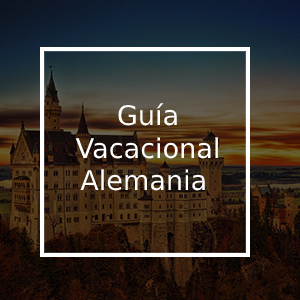
- Neuschwanstein, in Schwangau, Bavaria State: A fairy tale castle, rounded by forest, rivers, and mountains.
How to get around
Getting around Germany is very easy and comfortable because of the efficient public transportation network that they have. The best way to move through the cities is by car, that way you can go directly to your destination and at your own pace.
Rent a car can cost around €32 ($36) per day, but if you can afford it, it will be a great way to get to the places. If you prefer a slightly cheaper way of traveling, your second best option is by train. Numerous routes can take you to almost every place where you want to go.
How to stay connected in Germany
Maybe you are wondering how you will stay connected during your trip to Germany. We know that it is not easy to travel around a foreign country without your phone or just depending on Wi-Fi spots in some stores and restaurants.
It is better to order first a prepaid SIM card that lets you use your phone (navigate, send SMS, and make calls). The main cellular operators in Germany are Telekom, Vodafone, and Telefonica Germany. You can enter their websites and find the prepaid card that suits better your needs.
Another good option is to order and international SIM card. This is excellent if you are traveling to other countries near Germany because you can use the same card in different countries. A company called SimOptions, which is an international prepaid SIM cards provider, offers this option.
|
Frequently Asked Questions
Should I rent a car?
It is the best way to get around Germany and costs around $36 per day. Traveling by train or bus is also a good option to move around the country.
Which airports can I fly to?
The Frankfurt am Main Airport, the Munich Airport and the Düsseldorf Airport are the most popular airports in Germany.
What are the most popular types of hotels?
There are the traditional hotels rated from 1 to 5 stars, the country hotels away from the cities, and the Romantik Hotels (for example, castles converted into a hotel).
How much does a holiday cost?
You can spend around €107 ($120) on a holiday, including hotel, meals, transportation, and entertainment.
What are the best things to do?
One thing that you cannot miss if you visit the country in October is to assist to the Oktoberfest, the world’s largest folk festival.