
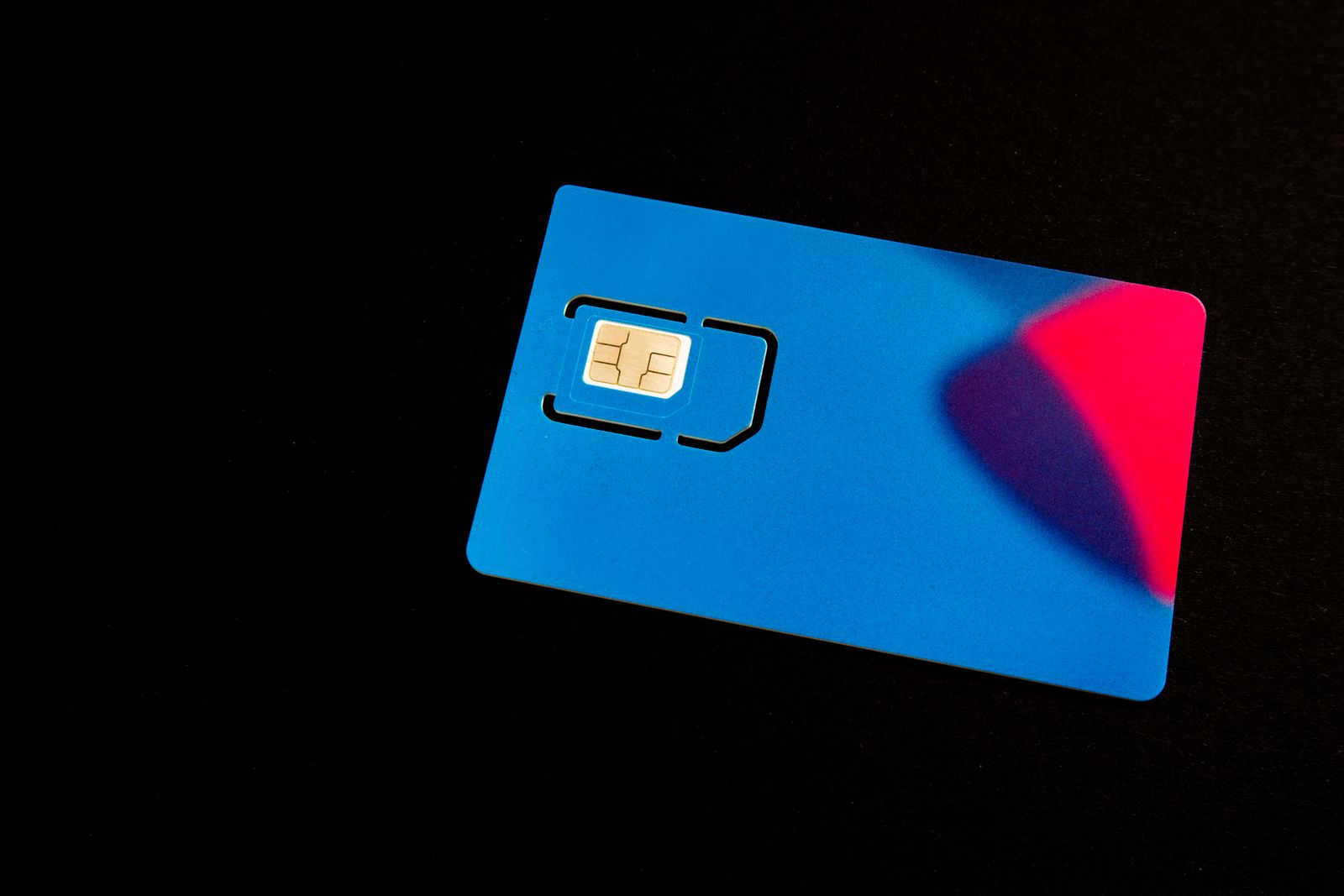
A SIM card reader is a small USB device that lets you read a SIM card on a computer. You slide the SIM in, plug the reader into your PC or Mac, and use its software to see what's stored on the card: contacts saved to the SIM, text messages saved to the SIM, recently dialled numbers and the card's ID numbers. It can't see your photos, your apps or anything saved in your phone's own memory, and it can't read an eSIM at all. This guide explains what a SIM card reader does, what it can and can't read, how to use one, and how to read a SIM card without one.
What is a SIM card reader?
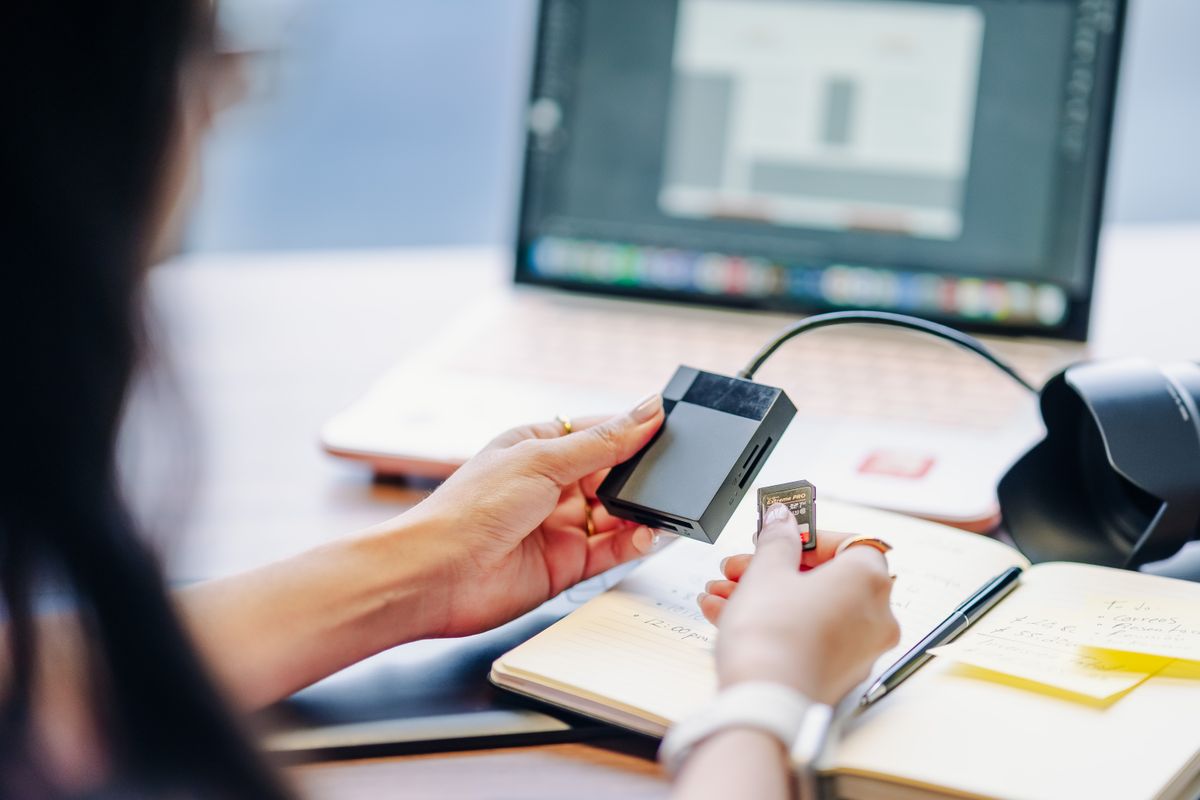
A SIM card reader (also called a SIM reader or SIM scanner) looks like a USB flash drive with a slot for a SIM card. Some are combined with a memory card reader. Inside, it's a smart card reader: it talks to the chip on your SIM the same way your phone does.
SIM stands for Subscriber Identity Module. The SIM is a small smart card with its own processor and memory. Its main job is to identify you to your mobile network, but it also has room to store some personal data, like phonebook entries and text messages (NIST: Guidelines on Mobile Device Forensics).
How does a SIM card reader work?
The reader powers the SIM's chip through its gold contacts and passes data between the chip and your computer. Software on your computer then asks the SIM for its files and shows them in a readable list. Without that software, your computer sees the reader but can't show you what's on the card.
What does a SIM card reader do?
- Back up the contacts and texts saved on an old SIM to your computer.
- View and edit the phonebook stored on the SIM.
- Read the SIM's ID numbers, like the ICCID and the IMSI.
- Manage the SIM PIN, depending on the software.
What can a SIM card reader read?
A reader only sees what's saved on the SIM itself. Here's what that usually includes, based on NIST's guide to mobile forensics:
- ICCID: the SIM's serial number, up to 20 digits, usually also printed on the card. See what an ICCID is.
- IMSI: the subscriber ID your network uses to recognise the SIM.
- Contacts saved to the SIM: mostly names and numbers.
- Text messages saved to the SIM.
- Last numbers dialled and some network and location information.
What a SIM card reader can't read
- Anything in your phone's memory: photos, apps, WhatsApp chats, call history and, on most smartphones, your texts and contacts. Depending on the phone, this data may sit only in the phone, not on the SIM.
- Contacts from an iPhone. Apple says an iPhone doesn't store contacts on the SIM card (Apple: Import contacts from your SIM card).
- The SIM's secret security key. The SIM uses it to prove to the network that it's genuine, without ever handing it out. This is what stops people from copying a SIM.
- An eSIM. There's no card to put in the reader (more on this below).
Can a SIM card reader recover deleted text messages?
Sometimes, but don't count on it. Forensic SIM tools can show deleted texts that are still on the card. That only works for messages that were saved to the SIM in the first place, and not every consumer reader's software offers it. If your phone saved your texts in its own memory, a SIM reader won't find them.
How to use a SIM card reader
- Remove the SIM from your phone. Turn the phone off. Push a SIM-eject tool or paper clip into the small hole next to the SIM tray, gently, and pull the tray out (Apple: Remove or switch the SIM card). Older phones keep the SIM under the battery.
- Check the size. SIMs come in mini, micro and nano sizes. If the reader's slot is bigger than your SIM, put the SIM in a matching adapter first.
- Install the software. Use the software that came with the reader, or the one the maker recommends, and check it runs on your computer's operating system.
- Insert the SIM and plug in the reader. The chip should face the reader's contacts. Don't force it.
- Open the software and read the card. If the SIM has a PIN, the software asks for it. Enter it carefully: after a few wrong tries (usually three) the SIM locks and you need the PUK code from your carrier.
- Save what you need. Export the contacts and messages to a file on your computer.
- Put the SIM back in your phone and turn it on.
How to read a SIM card on a computer
You can, but not with your computer's SD card slot: a SIM is a smart card and works differently from a memory card. You need a SIM card reader plus software that can read SIM files. Many readers are sold with their own software. Forensic tools do the same job in more depth.
How to read a SIM card without a reader
For most people, the easiest way to read a SIM card is to put it in a phone. If it fits and the phone is unlocked, you can copy the SIM contacts to the phone and your account in a few taps. If the old SIM is from a different carrier, see whether you can put your SIM card in another phone.
On an iPhone
- Put the SIM with your contacts into your iPhone.
- Go to Settings > Apps > Contacts and tap Import SIM Contacts.
- If asked, choose where to save them, then open Contacts to check they're there.
What gets imported depends on how your previous phone saved the contacts on the SIM (Apple).
On a Samsung Galaxy
- Open the Contacts app and tap the menu icon.
- Tap Manage contacts > Import or export contacts > Import.
- Select SIM card, pick the contacts, choose Phone and tap Import.
Steps can vary with your model and software version (Samsung: Import and export contacts).
On other Android phones
In the Contacts app, look for Fix & manage or Organise, then Manage SIM or Import from SIM. Save the contacts to your Google Account so they sync to any new phone. Google also lets you back up contacts stored on your phone or SIM card (Google: Export, back up, or restore contacts).
Privacy and the law: only read your own SIM
A SIM can hold names, numbers and messages, so treat a SIM reader like any other way into someone's data.
- Only read a SIM that's yours, or one the owner has clearly allowed you to read. Accessing someone's data without permission can be a crime. In the UK, for example, unauthorised access to data on a computer is an offence under the Computer Misuse Act 1990. Other countries have similar laws.
- Keep the backup safe. Store exported files somewhere private and delete copies you don't need.
- Don't lose the card. Anyone who has your SIM can use your number for calls, texts and security codes. Set a SIM PIN and contact your carrier right away if a SIM goes missing. Here's how to tell if you've been SIM swapped.
Can you read an eSIM with a SIM card reader?
No. An eSIM is a digital SIM built into your phone, so there's no card to take out (Apple: About eSIM on iPhone). iPhone 14 models and later bought in the United States don't have a SIM tray at all and only work with eSIM (Apple).
You can still see your eSIM's details on the phone itself. On an iPhone, go to Settings > General > About to find the EID, the ICCID and the IMEI (Apple: Find the serial number or IMEI). Your contacts and texts live on the phone and in your iCloud or Google account, not on the eSIM. More in our guide to eSIM vs physical SIM.
Travelling? Keep your SIM in your phone

A lot of people pull their SIM out abroad to swap in a local one, and that's when tiny nano SIMs get lost. With an eSIM, you don't need to touch your home SIM. Most eSIM phones can use two lines at once, so your home number stays on for texts and security codes while a travel eSIM handles your data (see what dual SIM is). Check that your phone supports eSIM and isn't carrier-locked before you buy.
Going to Europe, the USA or Asia? These data-only eSIMs install from a QR code, and your home SIM stays where it is.
Europe, USA and Asia plans shown · data-only eSIMs, no phone number · Find the eSIM for your destination
Want a European number for texts and calls too? Travel Basic+ from Bouygues Telecom comes with a French (+33) number, with calls and SMS within Europe. See all plans on our Europe eSIM page.
FAQs
What is a SIM card reader?
A small USB device with a SIM slot. Plug it into a computer and you can read, back up and edit the data stored on a SIM card, like SIM contacts and texts saved to the SIM.
What does a SIM card reader do?
It reads the files on the SIM: the ICCID and IMSI, contacts saved to the SIM, text messages saved to the SIM and recently dialled numbers. You can then back them up on your computer.
How do you read a SIM card?
Either put it in a phone and import the SIM contacts, or use a SIM card reader with software on a computer. For contacts, a phone is usually the quickest way.
Can you read a SIM card on a computer?
Yes, with a SIM card reader and software that can read SIM files. An SD card slot won't read a SIM.
Can I use a SIM reader to back up my contacts and text messages?
Only the contacts and texts saved on the SIM. On a smartphone, texts and contacts are often saved in the phone's memory or your iCloud or Google account instead. Back those up with your phone's own backup.
What does a SIM card reader look like?
Most look like a USB flash drive with a slot for a SIM card. Some are part of a multi-card reader that also takes memory cards.
Is there a SIM card reader app?
An app can't read a SIM card you're holding in your hand: the SIM has to be in a phone or a reader. Once it's in your phone, the Contacts app can import SIM contacts.
Can a SIM card reader read a locked SIM?
If the SIM has a PIN, you need to enter it. If the SIM is PUK-locked, get the PUK from your carrier first. See how to unlock a SIM card without a PUK code.
Can I read an eSIM with a SIM card reader?
No. An eSIM is built into the phone. You can see its EID and ICCID in your phone's settings.