

Singapore has the fastest home internet in the world, and the United Arab Emirates has the fastest mobile internet. At the other end, Cuba has the slowest ranked home internet and Eritrea the slowest ranked mobile internet. This is based on Ookla's Speedtest Global Index for March 2026 (Ookla: Speedtest Global Index), shown as median download speeds in megabits per second (Mbps).
Below you get the top and bottom of both lists, why the two lists differ, and what it means if you are travelling and need to stay online.

Which country has the best internet in the world?
It depends on what you measure. Ookla ranks two things separately: fixed broadband (the Wi-Fi at home or in a hotel) and mobile data (4G and 5G on your phone). A median is the middle result: half of the tests were faster, half were slower. The numbers below come from the March 2026 data as listed on Wikipedia: List of countries by Internet connection speeds, which cites the Ookla index (153 countries for fixed broadband, 105 for mobile).
Fastest fixed broadband (Wi-Fi at home)
- Singapore: 425.46 Mbps. See our best eSIM for Singapore.
- United Arab Emirates: 384.51 Mbps. See our best eSIM for the UAE.
- Hong Kong: 352.40 Mbps. See our best eSIM for Hong Kong.
- France: 352.35 Mbps. See our best eSIM for France.
- Iceland: 347.30 Mbps. See our best eSIM for Iceland.
Fastest mobile internet (4G and 5G)
- United Arab Emirates: 644.66 Mbps
- Qatar: 576.06 Mbps. See our best eSIM for Qatar.
- Kuwait: 372.76 Mbps. See our best eSIM for Kuwait.
- Bahrain: 274.94 Mbps. See our best eSIM for Bahrain.
- Brazil: 265.79 Mbps. See our best eSIM for Brazil.
South Korea comes sixth for mobile with 265.20 Mbps, and its home broadband median is 257.76 Mbps. That is why it often comes up as a country with great internet.
How other popular destinations compare
These are the same March 2026 medians (fixed broadband, then mobile):
- United States: 309.80 and 213.29 Mbps
- Canada: 277.70 and 110.92 Mbps. See our best eSIM for Canada.
- Spain: 277.98 and 92.32 Mbps
- United Kingdom: 172.24 and 75.91 Mbps. See our best eSIM for the UK.
- Australia: 154.09 and 116.84 Mbps. See our best eSIM for Australia.
- Germany: 103.72 and 74.58 Mbps. See our best eSIM for Germany.
Which country has the worst internet in the world?
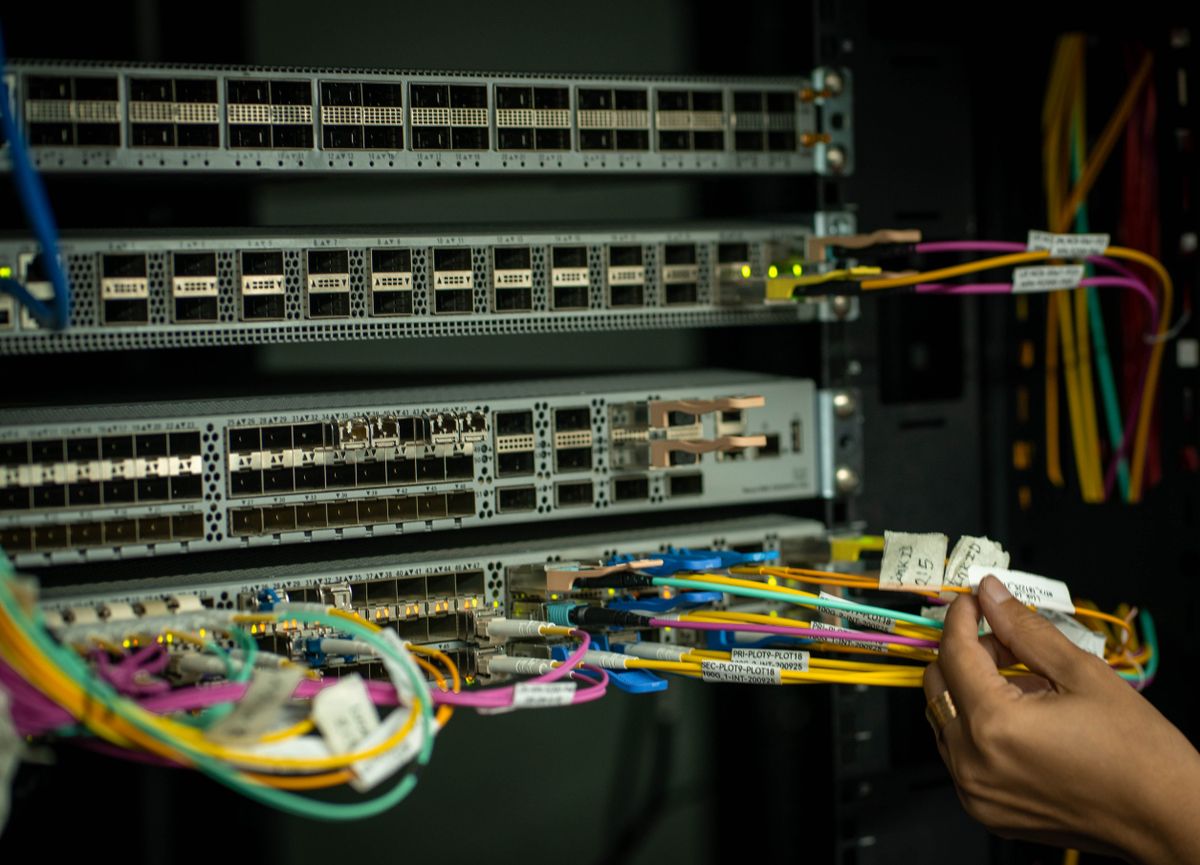
The lowest medians in the same March 2026 data are below. Low speeds can come from conflict, limited network investment or a small number of tests, so treat the exact order as a snapshot and not as a fixed ranking.
Slowest fixed broadband
- Cuba: 3.83 Mbps
- Syria: 4.24 Mbps
- Afghanistan: 4.93 Mbps. See our best eSIM for Afghanistan.
- Ethiopia: 11.17 Mbps
- Libya: 11.65 Mbps
Slowest mobile internet
- Eritrea: 4.75 Mbps
- Bolivia: 15.24 Mbps
- Afghanistan: 15.91 Mbps
- Libya: 22.89 Mbps
- Paraguay: 26.22 Mbps
Only countries with enough tests are ranked, so some places do not appear in the lists at all. A low median does not mean you cannot get online. It means a download or video call takes noticeably longer than in the countries above.
Why fixed and mobile speeds can be so different
A country can be strong in one list and weak in the other. India has a fixed broadband median of 60.85 Mbps but a mobile median of 126.73 Mbps. Japan is the opposite, with 255.27 Mbps fixed and 70.28 Mbps mobile. Venezuela shows 100.11 Mbps fixed but only 29.39 Mbps mobile.
The reasons are the network type (fibre, cable or 5G), how much a country has invested in each, and how many people share the same cell. So if the home internet where you are going is slow, mobile data can still be your better option. In India, for example, you can look at our best eSIM for India.
What this means when you travel

Hotel and cafe Wi-Fi can be slow or unstable, even in a fast country. A data eSIM gives you your own mobile connection, so you do not depend on it. You install it before you leave, and it connects once you land. If you need help with the setup, read how to install an eSIM.
Your real speed depends on your phone, the local network and where you are, so a country's median is a guide and not a promise. If you are heading to the Gulf, Asia or Europe, these plans cover several countries with one eSIM.
Regions shown: Middle East, Asia and Europe. See every country and region on our destinations page or the Europe eSIM page.
These plans are data only, so there is no phone number for calls and SMS. Not sure which kind you need? Read what an eSIM is.
Does the internet provider matter?
Yes. Inside one country, speeds differ a lot between providers, cities and even streets. Country medians hide that. Before you sign a home internet contract, check which providers actually serve your address and compare their stated speeds. Also read what data speed means to know which number to look at.
Frequently asked questions
Which country has the fastest internet in the world?
For fixed broadband, Singapore, with a median download speed of 425.46 Mbps in March 2026. For mobile data, the United Arab Emirates, with 644.66 Mbps.
Which country has the slowest internet in the world?
Among ranked countries in March 2026, Cuba has the slowest fixed broadband (3.83 Mbps) and Eritrea has the slowest mobile internet (4.75 Mbps).
Which country has the worst wifi?
Wi-Fi speed depends on the line behind your router, so the fixed broadband list is the closest match. Cuba, Syria and Afghanistan have the lowest medians there.
Does South Korea have the best internet in the world?
It is among the best, but it is not first. In March 2026 it ranked sixth for mobile (265.20 Mbps), and its fixed broadband median was 257.76 Mbps.
Why do different websites give different rankings?
Each source uses its own tests, period and method, and some use averages instead of medians. Rankings also change every month, so always check the date.
What is a good internet speed?
That depends on what you do and how many people share the connection. Our guide to data speed explains what the numbers mean.
Is mobile internet or Wi-Fi faster?
It depends on the country. In India mobile is faster than the fixed median, and in Japan it is the other way round, as shown above. In the UAE, for example, mobile is clearly faster than the fixed median. For the difference between network types, see 4G vs 5G.