

The main difference between 4G and 5G is speed, delay and capacity. 5G is the newer mobile network generation. It can move more data, it reacts faster (lower latency) and it handles many more connected devices at once. 4G is the network most phones still use most of the time, and it's still fast enough for browsing, maps, social media and video calls. To use 5G, you need a 5G phone, a plan that includes 5G and 5G coverage where you are. This guide compares 4G vs 5G on speed, latency, coverage and battery, shows you how to tell which one you're on, and explains how 5G works when you travel.
4G vs 5G at a glance
| 4G (LTE) | 5G | |
|---|---|---|
| Generation | 4th generation of mobile networks | 5th generation, built to follow 4G |
| Top speed on paper | ITU target: up to 1 Gbit/s when you're not moving | ITU target: up to 20 Gbit/s download |
| Speed in daily use | Fine for browsing, maps, streaming and video calls | Often several times faster where 5G coverage is good |
| Latency (delay) | Low | Designed to be lower still |
| Capacity | Can slow down in crowded places | Built for many more devices in the same area |
| Coverage | Very wide, in cities and the countryside | Growing, best in cities, patchier elsewhere |
| Battery | Efficient | Can use more battery, so phones switch to 4G when 5G brings no benefit |
| What you need | A 4G phone and plan | A 5G phone, a 5G plan and 5G coverage |
Short version: 5G is better on paper in every way. In daily life, the difference you notice depends on where you are and how good the 5G network is there.
What is 4G?
4G is the fourth generation of mobile network technology, after 2G and 3G. It's the network that made fast mobile internet normal: HD video, video calls, music streaming and apps that work almost like on Wi-Fi.
- LTE and 4G: most 4G networks run on a technology called LTE, which is why your phone may show "4G" or "LTE". Here's the difference between 4G and LTE.
- 4G+ or LTE-A: this is LTE-Advanced, an upgraded version of 4G. The ITU, the UN agency that sets mobile standards, gave LTE-Advanced the official 4G designation (IMT-Advanced) (ITU: IMT-Advanced standards announced).
- Speed target: the ITU's targets for 4G were 100 Mbit/s on the move and 1 Gbit/s when you're not moving (ITU: IMT-Advanced). Real speeds are lower and depend on your carrier, your plan, your phone and how busy the network is.
What is 5G?
5G is the fifth generation of mobile networks. Its radio technology is called NR (New Radio). It was designed for three things: much faster mobile broadband, very low and reliable latency, and a huge number of connected devices, like sensors and smart meters. The ITU's minimum requirements for 5G include a peak download rate of 20 Gbit/s, a delay of 4 ms for mobile broadband (1 ms for ultra-reliable uses) and up to 1 million devices per square kilometre (ITU-R Report M.2410). Want more detail? Read our guide on what 5G is, how it works and its benefits over 4G.
5G Non-Standalone and 5G Standalone
Many carriers launched 5G as Non-Standalone (NSA): the 5G radio works together with the existing 4G network. 5G Standalone (SA) connects to a new 5G core network, and only that setup supports the full set of 5G features. Some carriers need a newer SIM for Standalone, as explained in do you need a 5G SIM card. That's why 4G and 5G often work side by side, and why your phone can switch between them without you noticing.
The key differences between 4G and 5G
Speed
On paper, 5G's peak speed target is 20 times 4G's. You won't see that on your phone. In everyday use, 5G is often several times faster than 4G where coverage is good, not the "100 times faster" you sometimes read. How much faster depends on the country, the carrier, the 5G frequency you're on and how many people share the mast.
For most things you do on a phone, like messages, maps, social media and HD video, a good 4G connection is already enough. 5G makes the biggest difference for large downloads, uploading photos and videos, and busy places.
Latency
Latency is the delay between your action and the network's response. 5G was designed for lower latency than 4G, which helps with online gaming, video calls and, in the future, things like connected cars and remote-controlled machines. On a phone, you feel the difference less than you feel the speed. The lowest latency usually needs 5G Standalone.
Capacity
Ever had full bars but no internet at a concert, a stadium or a busy station? That's network congestion. 5G can serve many more devices in the same area, so it copes better with crowds. It doesn't make congestion disappear, but it helps.
Coverage
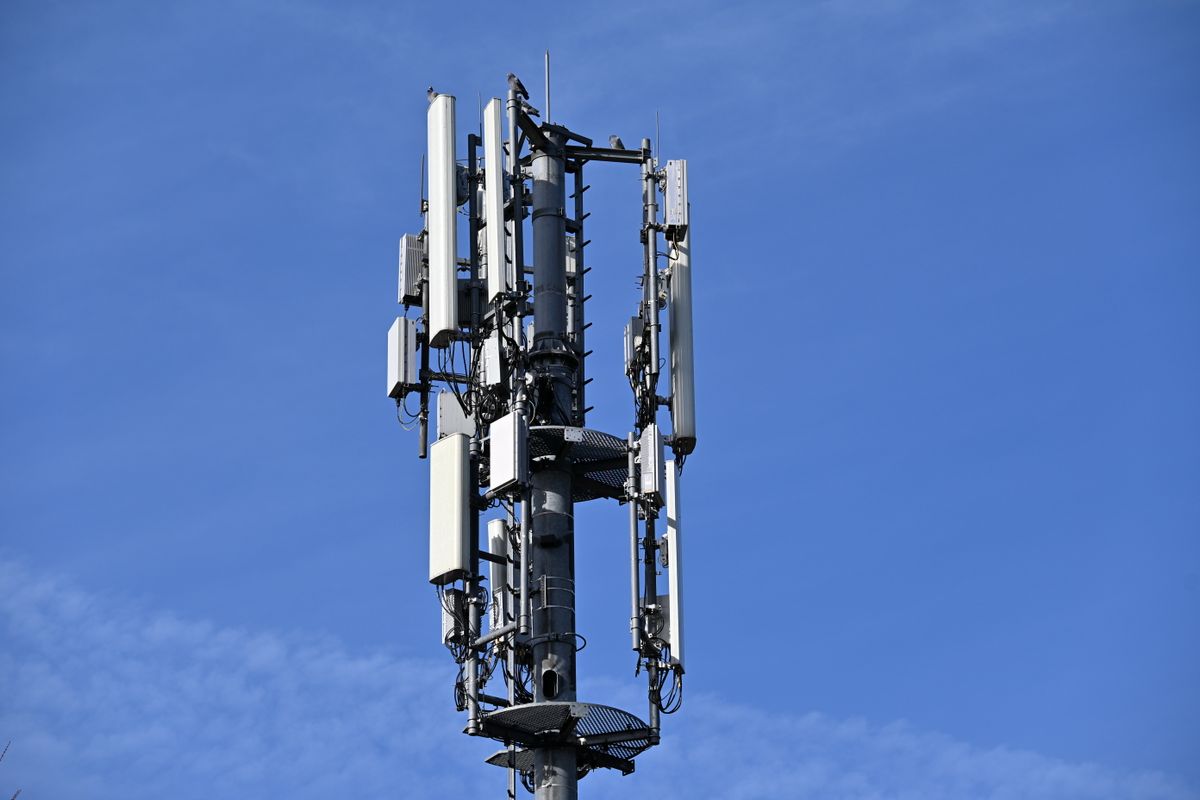
4G covers far more places than 5G today. 5G runs on different frequencies. Lower frequencies reach further and get through walls better. Higher frequencies carry more data but over a shorter range, so they are mostly used in city centres and busy spots. Apple's iPhone shows icons like 5G+, 5G UW or 5G UC when your carrier's faster, higher frequency 5G is available (Apple: Use 5G with your iPhone).
When you leave 5G coverage, your phone switches to 4G on its own. You don't lose your connection, just some speed.
Battery
5G can use more battery than 4G, especially when the signal is weak. That's why phones manage it for you:
- iPhone: the default 5G Auto setting switches to LTE when 5G wouldn't give you a noticeably better experience, to save battery. 5G On always uses 5G when available and might reduce battery life (Apple).
- Google Pixel: Battery Saver turns off 5G (Google: Fix mobile connectivity issues).
Data use
5G doesn't use more data for the same thing. A video uses the same data on 4G and 5G. But faster speeds can make apps load higher quality video and make big downloads go quicker, so your data can run out sooner. On iPhone, the Allow More Data on 5G data mode lets apps use more cellular data. More about this in our guide to cellular data.
4G or 5G: which should you use?
Most of the time, you don't have to choose. Leave your phone on its automatic setting (5G Auto on iPhone, 5G recommended on Pixel) and it picks the best network for you.
Stick with 4G if
- Your battery is low or 5G keeps dropping in and out where you are.
- There's no real 5G coverage where you live or travel.
- You're happy with your speed. For browsing, messaging and maps, 4G is enough.
5G is worth it if
- You have good 5G coverage at home, at work or where you travel.
- You often download or upload large files, stream in high quality or use your phone as a hotspot.
- You spend time in crowded places where 4G slows down.
Do you need a 5G phone to get 5G?
Yes. A 4G phone only connects to 4G, even in a 5G area. To get 5G, you need three things: a phone that supports 5G (for example iPhone 12 models or later, or Pixel 4a (5G) or later), a plan that includes 5G, and 5G coverage. Your SIM card is usually not the issue. Most 4G SIMs work with 5G, but some carriers ask you to swap an old one. Read do you need a new SIM card for 5G for the details, including eSIM.
Thinking about a new phone? If you plan to keep it for several years, a 5G phone makes sense, as 5G coverage keeps growing. If your 4G phone works well and 5G coverage is poor where you live, there's no rush.
How to tell if you're on 4G or 5G
Look at the status bar at the top of your screen. It shows 5G, LTE or 4G next to the signal bars.
- iPhone: a 5G icon means your carrier's 5G network is available and your iPhone can use it. To change your setting, go to Settings > Cellular > Cellular Data Options (or Settings > Mobile Data). Under Voice & Data, choose 5G Auto, 5G On or LTE.
- Google Pixel: go to Settings > Network & internet > SIMs, pick your SIM and open Preferred network type (Google: Connect to mobile networks on a Pixel phone). On a Pixel, the 5G icon means 5G is available where you are, not that you're using it at that moment.
- Other Android phones: look for Network mode in your mobile network settings. If 5G is listed, your phone supports it.
4G and 5G abroad and with a travel eSIM

Having 5G at home doesn't mean you'll get 5G abroad. Apple notes that many carriers support 5G roaming, but if yours doesn't, you'll get data over 4G or LTE instead. Another option is a local SIM or eSIM with 5G where it's available (Apple).
Before you go, check two things:
- Your home plan: does it include roaming in that country, does it include 5G there, and what does it cost? See international roaming with an eSIM.
- A travel eSIM's speed: each travel eSIM plan lists its speed, 5G or 4G/LTE. That depends on the plan and its partner network, not on your phone. A good 4G/LTE plan is plenty for maps, messages and video calls on a trip.
With a travel eSIM, your usual SIM stays in your phone for calls and texts, and the eSIM handles your data. Make sure your phone takes eSIM first: check eSIM compatibility.
If 5G matters to you on your trip, these SimOptions plans list 5G speed. The Europe plans are from Bouygues Telecom and include a French +33 number with calls and texts. The Canada plan is data-only.
Europe and Canada plans shown · 5G where available · See all Europe eSIMs · Find the eSIM for your destination
FAQs
What is the difference between 4G and 5G?
5G is the newer generation of mobile networks. It's faster, has lower latency and can handle many more devices at once. 4G has wider coverage today and is still fast enough for most things you do on a phone.
Is 5G better than 4G?
On paper, yes: more speed, less delay and more capacity. In practice, it depends on coverage. Good 4G can feel better than weak 5G.
How much faster is 5G than 4G?
The ITU's peak target for 5G is 20 Gbit/s, against 1 Gbit/s for 4G. In daily use, 5G is often several times faster than 4G where coverage is good, but the gap varies a lot by country and carrier.
Should I use 4G or 5G on my phone?
Leave it on automatic (5G Auto on iPhone). Your phone uses 5G when it helps and 4G when it doesn't. Pick LTE or 4G only if 5G is unstable where you are or you want to save battery.
Does 5G drain the battery faster than 4G?
It can, especially with a weak 5G signal. Apple says the 5G On setting might reduce battery life, and Battery Saver on a Pixel turns 5G off.
Can a 4G phone use a 5G network?
A 4G phone connects to the 4G network, which keeps running alongside 5G. To use 5G itself, you need a 5G phone.
Do I need a 5G SIM card?
Usually not. Most 4G SIM cards work with 5G. Some carriers ask you to replace an older SIM. More in do you need a 5G SIM card.
How do I know if I'm on 4G or 5G?
Check the icon next to your signal bars. It shows 5G, LTE or 4G. On a Pixel, the 5G icon means 5G is available in your area, not that you're on it at that moment.
Do travel eSIMs work on 5G?
Some do. Each plan lists its speed, 5G or 4G/LTE. You also need a 5G phone and 5G coverage in the country you visit.