
5G is the fifth generation of mobile networks. It's built to give you faster data, a much quicker response time (latency) and room for far more connected devices than 4G. To use it, you need a 5G phone, a 5G plan and 5G coverage where you are. When there's no 5G, your phone simply switches back to 4G.
Below you'll find what 5G is, how it works, its main benefits and advantages over 4G, the trade-offs and how to get 5G when you travel. The facts come from the ITU (the UN agency for telecoms), 3GPP (the body that writes the mobile standards) and Apple Support.
What is 5G?
5G is the common name for the mobile technology that the ITU calls IMT-2020. The ITU says it has no official definition of "5G" itself, but the main characteristics developed for 5G correspond to what it specified for IMT-2020. In the same way, 3G matches IMT-2000 and 4G is linked to IMT-Advanced (ITU FAQ on IMT).
5G wasn't invented by one company. 3GPP, a partnership of standards bodies, defined the 5G system from its Release 15, which was functionally frozen in June 2018 and fully specified by September 2019 (3GPP). The ITU then published the detailed IMT-2020 radio specifications as Recommendation ITU-R M.2150 in February 2021 (ITU).
The ITU describes three main ways 5G is used:
- Enhanced mobile broadband (eMBB). Faster data for the things you already do, like video, social media and downloads.
- Ultra-reliable and low-latency communications (URLLC). Very fast, dependable connections for time-critical uses.
- Massive machine type communications (mMTC). Huge numbers of connected devices, such as sensors and smart devices.
How does 5G work?
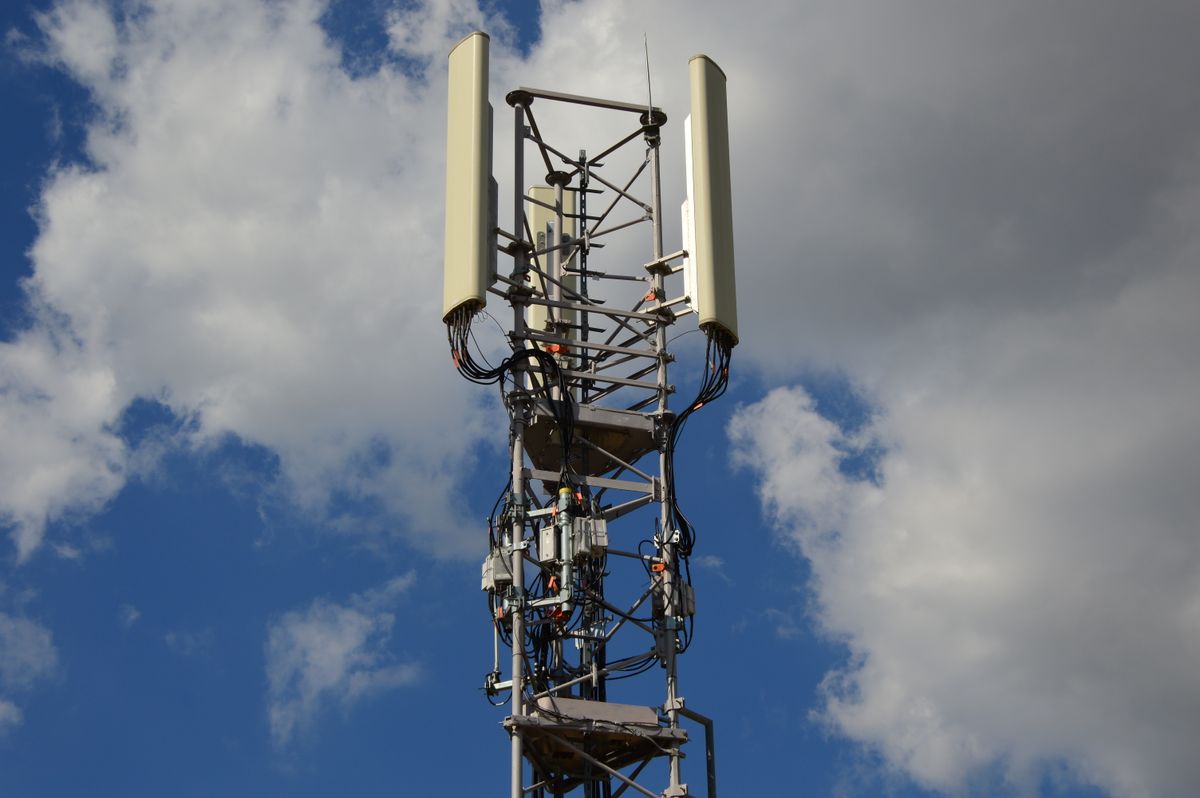
Like earlier generations, 5G has three parts: your phone with its SIM or eSIM, the radio network (the antennas) and the core network behind it (3GPP). Here's what's new:
- A new radio, called NR. 3GPP says the 5G radio uses OFDM in the downlink, similar to 4G LTE. OFDM splits the signal across many narrow channels so more data gets through cleanly.
- Network slicing. The ITU explains that one 5G network can act as many separate networks at the same time. Each "slice" is tuned for one purpose, such as a factory, an emergency service or regular phone users.
- Edge computing. 3GPP lists edge computing as one of the technologies 5G uses for faster response times, because data is handled closer to you.
- Different frequencies per country. The ITU identifies frequency bands for mobile networks, but each country decides which bands it makes available. That's why 5G coverage and speeds vary from one country and carrier to another.
What are the benefits of 5G?
The ITU set minimum technical requirements that a technology must meet to count as IMT-2020 (Report ITU-R M.2410). They show the main advantages of 5G over earlier networks. Keep in mind they're test targets for the technology, not a promise of what your phone will get on a given street.
1. Higher speeds
The ITU's peak data rate target is 20 Gbit/s for downloads and 10 Gbit/s for uploads. The target for the speed a typical user experiences in a dense city is 100 Mbit/s down and 50 Mbit/s up. In practice, you'll notice it as quicker downloads and smoother HD video streaming.
2. Lower latency
Latency is the delay between sending data and it arriving. The ITU's requirement for the radio part of the network is 4 ms for mobile broadband and just 1 ms for ultra-reliable low-latency uses. That's what makes video calls, gaming and remote control of machines feel more responsive.
3. Many more connected devices
5G must support a connection density of 1,000,000 devices per square kilometre. That's why it suits crowded places, smart cities and the Internet of Things.
4. Works at high speed
The ITU sets mobility classes up to 500 km/h, mainly with high-speed trains in mind. Its requirement for the interruption when your connection moves from one antenna to the next is 0 ms.
5. High reliability
For time-critical uses, the ITU requires a success probability of 99.999% for delivering a small data packet within 1 ms. 3GPP mentions remote control of process automation needing a reliability of 99.9999%.
6. Energy efficiency
5G technologies must be able to let the network and your device sleep when no data is being sent, which helps save energy.
7. More uses beyond phones
The ITU says previous generations were mostly designed for phones, while 5G was designed for much more flexible use. Its example is securely streaming high-quality video from an ambulance to the hospital. 3GPP lists sectors such as automotive, rail, logistics, public safety, health, smart cities and media.
Are there any downsides to 5G?
- Coverage isn't everywhere. You only get 5G where your carrier has 5G coverage, and Apple notes that 5G isn't available in all countries or regions.
- Battery life. Apple says forcing "5G On" might reduce battery life. Its default "5G Auto" setting switches to LTE when 5G wouldn't give you a noticeably better experience.
- Data usage. Faster connections make it easy to use more data. Apple's "Allow More Data on 5G" setting enables higher-quality video and FaceTime, iOS updates over cellular and automatic iCloud backups, which uses more data.
- You need new hardware and a 5G plan. An older 4G phone can't use 5G, and your plan must include 5G.
Worried about data? Our tips to reduce data usage abroad help you make a plan last.
5G vs 4G: what's the difference?
4G (LTE) is the network most phones still use as their base. 5G adds a new radio and a new core network, with much higher speed and capacity targets and lower latency. 3GPP says the 5G system supports almost all 4G LTE services, and that moving between a 5G and a 4G core network is supported with minimum impact on you (3GPP). For a side-by-side look, read our guide to the difference between 4G and 5G, and if you're unsure what LTE means, see 4G vs LTE.
Will a 5G phone work on a 4G network?
Yes. A 5G phone also works on 4G. Apple says that with 5G Auto, an iPhone automatically switches to LTE when 5G speeds don't provide a noticeably better experience, and you can choose LTE only if you want (Apple Support).
It doesn't work the other way round. A 4G phone can't connect to 5G, because 5G needs a 5G-capable phone. It keeps using 4G where your carrier runs it. As for the SIM, Apple says you can use the SIM from your previous iPhone in a new 5G iPhone, but in some cases you need to ask your carrier to set it up for 5G. Our article on whether you need a 5G SIM card goes into more detail.
What do you need to use 5G?
Apple lists three things for 5G on iPhone, and the same idea applies to any phone (Apple Support):
- A 5G phone. For iPhone, that's an iPhone 12 model or later. For Android, check your phone maker's spec page.
- A carrier that supports 5G where you are.
- A 5G plan. Not every plan includes 5G, so check yours.
When you're connected, you'll see a 5G icon in the status bar. Apple says icons such as 5G+, 5G UW, 5G UC or 5GA mean your carrier's enhanced 5G network is available, which can include its higher frequency version of 5G. If you don't see 5G, Apple suggests checking your coverage and plan with your carrier, and turning Airplane Mode on and off.
How to get 5G when you travel
Apple says many carriers around the world support 5G roaming. If yours doesn't, you get data over 4G or LTE instead, or you can get a local SIM or eSIM with 5G where available (Apple Support).
A travel eSIM is the easy way to do that. You buy it online, install it before you fly and keep your home SIM in the phone for calls and texts. First, check that your phone supports eSIM. The plans below are data-only and support 5G where the local network offers it, otherwise they use 4G.

Going to Japan? Our best eSIM for Japan guide helps you pick a plan.
Data-only plans for Japan · 5 GB, 10 GB or 20 GB · See all Japan eSIMs
Heading to Thailand? See the best eSIM for Thailand.
Data-only plans for Thailand · 5 GB, 10 GB or 20 GB · See all Thailand eSIMs · Going somewhere else? Find your destination
FAQs
What does 5G stand for?
The "G" stands for generation. 5G is the fifth generation of mobile networks, which the ITU calls IMT-2020.
What are the main advantages of 5G?
Higher speeds, lower latency, room for many more connected devices, connections that hold up at high speed and higher reliability for time-critical uses.
How fast is 5G?
The ITU's targets are a peak of 20 Gbit/s down and a typical user experience of 100 Mbit/s down in dense cities. What you get depends on your carrier, your phone and where you are.
Can a 5G phone use 4G?
Yes. When 5G isn't available or doesn't help, your phone uses 4G LTE instead.
Will a 4G phone work on 5G?
No. A 4G phone keeps using 4G. To connect to 5G, you need a 5G-capable phone and a 5G plan.
Who invented 5G?
No single company. 3GPP defined the 5G system from Release 15 (2018 to 2019), and the ITU published the IMT-2020 specifications in 2021.
Does 5G use more battery?
It can. Apple says always using 5G might reduce battery life, which is why its default setting switches to LTE when 5G gives no noticeable benefit.
Can I use 5G abroad?
Yes, if your carrier supports 5G roaming in that country, or if you use a local SIM or a travel eSIM with 5G where available.