To get through airport security faster, pack your liquids in containers of 100 ml (3.4 oz) or less in one clear bag, keep your laptop and liquids easy to reach, and have your ID and boarding pass in hand before you join the line. If you fly from US airports often, TSA PreCheck lets you keep your belt and light jacket on and leave electronics and liquids in your bag. Rules differ by country and even by airport, so check the airport you leave from before you pack.
Below you'll find what to do before you leave home, what happens at the checkpoint in the US, the UK and the EU, and how trusted traveller schemes like TSA PreCheck and Global Entry work. The facts come from TSA, CBP, GOV.UK and the European Commission.
Before you leave home: pack for the checkpoint
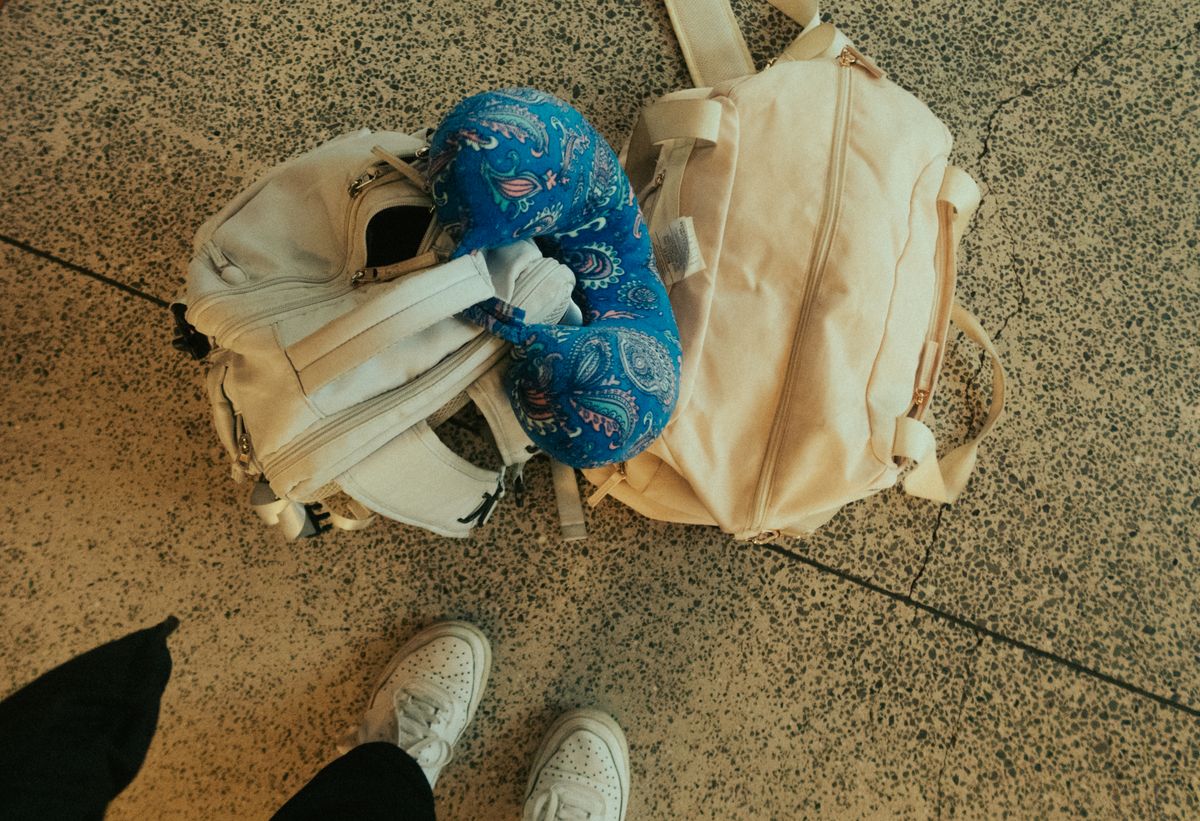
Most delays at security come from bags that have to be searched again by hand. TSA says how and what you pack can affect the screening process, and recommends keeping your bag organized and checking for prohibited items before you go (TSA).
- Put big liquids in your checked bag. Anything over 100 ml (3.4 oz) goes in the hold. GOV.UK also suggests packing liquids in your hold luggage if you can.
- Pack small liquids together. Put all your travel-size containers in one clear, resealable bag and keep it at the top of your carry-on.
- Keep electronics in one spot. Laptops and tablets often have to come out of your bag, so don't bury them under clothes.
- Charge your devices. GOV.UK says that if your device doesn't switch on when asked, you won't be allowed to take it on the plane (GOV.UK).
- Think about food and powders. GOV.UK says they can block X-ray images, so your bag may need a manual check. Put them in your hold luggage to avoid delays.
- Empty your pockets into your jacket or bag. Keys, coins, your phone and your watch usually go in a tray, so having them together saves time.
For more ways to pack light and smart, see our travel hacks and our list of must-have items when traveling abroad.
The liquids rule: US, UK and EU
Liquids include more than drinks. GOV.UK lists soups, jam, honey, creams, lotions, perfume, mascara, lip gloss, sprays, toothpaste, gels and contact lens solution. Frozen liquids are not allowed in UK hand luggage.
United States (TSA 3-1-1)
TSA allows travel-sized containers of 3.4 ounces (100 ml) or less per item, packed in one quart-sized bag in your carry-on. Larger containers go in your checked bag. Medications and food for babies and children are exempt from the limit (TSA).
United Kingdom
The UK rules now depend on the airport. At most UK airports you can't take liquids in containers larger than 100 ml through security, even if the container is only part full. Some airports allow containers up to 2 litres, and you don't have to use a separate bag at every airport. Where a bag is required, it must be a single transparent, resealable bag of no more than a litre, about 20 cm x 20 cm, one per person (GOV.UK).
Check the rules for the airport you fly from and every airport on your route, including the way home. A larger allowance at your departure airport doesn't mean the next airport will accept it. Liquids up to 2 litres for medical needs, special diets, baby food and baby milk are allowed at all UK airports.
European Union
The European Commission says you can carry liquids in containers of no more than 100 ml, packed in one transparent resealable bag of up to one litre. Essential medicines, baby food and milk are allowed in larger amounts for use during the trip, and you may be asked to prove they are genuine. Duty free liquids are fine as long as the item and the receipt stay sealed in the security bag (European Commission). The Commission also points you to your airport's website for local details, so check it before you fly.
Laptops, phones and other electronics
In a standard TSA lane, you remove personal electronic devices larger than a cell phone from your carry-on and place them in a bin with nothing on or under them (TSA). The European Commission asks you to take your laptop and other large electrical devices out of your bag and put them in a separate tray.
In the UK, phones, laptops, tablets, hairdryers, travel irons and electric shavers are allowed in both hand and hold luggage. E-cigarettes are allowed in hand luggage only. Your airline may have its own limits, especially on batteries, so check with it if you're not sure.
At the checkpoint: what to expect
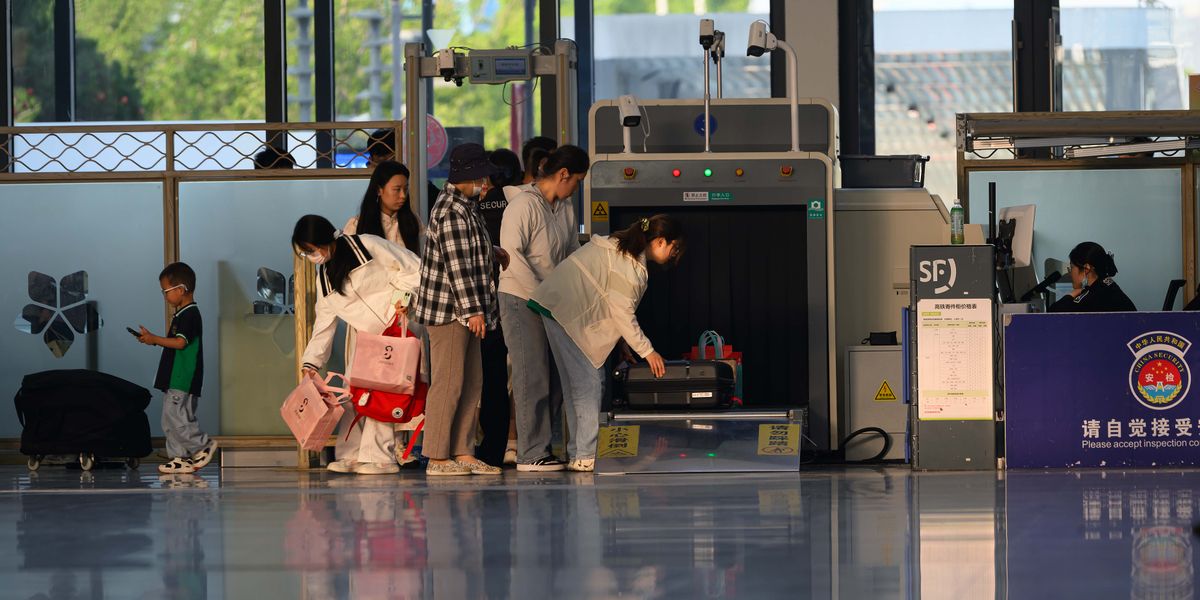
Have your ID and boarding pass ready before you reach the officer, then follow the instructions you're given. The European Commission lists the steps for EU airports, and they work well as a checklist almost anywhere:
- Put your bag of liquids in a tray.
- Take off your jacket or coat for separate screening.
- Remove metal items like keys, coins, your watch, belt, jewellery and phone, and put them in a tray.
- Take out your laptop and other large electrical devices.
- Walk through the scanner when an officer asks you to.
Do you still take your shoes off in the US?
Not at domestic airports. In July 2025, DHS announced that passengers at domestic airports can keep their shoes on during TSA screening. Identity checks and Secure Flight vetting still apply (TSA).
Bring the right ID in the US
Since May 2025, you need a REAL ID or another acceptable ID, such as a passport, to board a domestic flight. TSA says travelers without an acceptable ID must pay a $45 fee (TSA). Our guide to TSA and REAL ID has the details.
TSA also recommends arriving early to leave enough time for screening. How early depends on your airline and airport, so check their advice before you set off.
TSA PreCheck: the fastest lane in the US
TSA PreCheck gives you a dedicated lane where you keep your belt, light jacket and shoes on, and leave electronics and 3-1-1 liquids in your bag. TSA says about 99% of PreCheck passengers wait less than 10 minutes, but no one is guaranteed expedited screening on every trip (TSA PreCheck).
How hard is it to get TSA PreCheck?
It's a short process. TSA describes three steps:
- Apply online. TSA says the application can take as little as 5 minutes.
- Visit an enrollment location. Make an appointment or walk in. Staff check your documents and take your fingerprints and photo in about 10 minutes. TSA lists over 1,300 locations.
- Add your Known Traveler Number. Put your KTN in your airline bookings and travel profile.
It costs $85 or less for five years, depending on the enrollment provider (CLEAR, IDEMIA or Telos). Children 17 and under can join an adult with PreCheck in the PreCheck lane for free. For eligibility, check the official TSA PreCheck page before you apply.
Is there a fast option for last-minute travelers?
Not really. PreCheck needs an application and an in-person visit, so it won't help on a trip you booked this morning. Your best bet then is to pack for the checkpoint as described above and arrive early.
Global Entry: for international trips to the US
Global Entry is a CBP Trusted Traveler Program that speeds up your arrival in the United States if you're pre-approved as low-risk. The fee is $120 and membership lasts five years. It includes TSA PreCheck, all applicants have a background check, and first-time enrollment needs an in-person interview. You can do the interview at an enrollment center or through Enrollment on Arrival or Enrollment on Departure (CBP).
CBP says Global Entry suits frequent international or business travelers. If you travel less often, it suggests TSA PreCheck and the Mobile Passport Control app instead.
Travel tips for after security
Once you're through, the airport is a good place to get your phone ready. If you install a travel eSIM at home, it connects as soon as you land, so you can check your gate, message your hotel and open maps without searching for Wi-Fi. Read what an eSIM is, then install your eSIM before you leave. Our guides to must-have travel apps, airport lounge memberships and beating jet lag cover the rest of the journey.
Flying to the US? These data-only plans don't include a phone number.
Data-only plans for the USA · 10 GB, 20 GB or 50 GB · See all USA eSIMs · Compare in our best eSIM for the USA guide
Heading to Europe? These plans are data-only too.
Data-only plans for Europe · 10 GB, 20 GB or 50 GB · See all Europe eSIMs · Heading somewhere else? Find your destination
FAQs
What is the fastest way through airport security?
Pack liquids and electronics so they're easy to take out, have your ID ready, and arrive early. If you fly often from US airports, TSA PreCheck is the biggest time saver.
What are the TSA PreCheck requirements?
You apply online, then visit an enrollment location for fingerprints, a photo and a document check, and pay $85 or less for five years. Check the official TSA PreCheck page for eligibility.
Can I take a 100 ml bottle through security?
Yes, in the US, the UK and the EU, if it's in your clear liquids bag. Some UK airports allow larger containers, so check with every airport on your route.
Do I need to take my laptop out at security?
In standard lanes, usually yes. TSA asks you to remove electronics larger than a cell phone, and the EU asks for laptops in a separate tray. In the TSA PreCheck lane, you leave them in your bag.
Does Global Entry include TSA PreCheck?
Yes. CBP lists TSA PreCheck access as one of Global Entry's benefits.
Can I take medicine or baby milk over the liquids limit?
Yes. TSA, the UK and the EU all exempt medications and baby food or milk from the 100 ml limit. At EU airports you may be asked to show they're genuine.
Can I get through security if my phone battery is dead?
Maybe not. GOV.UK says that if your device doesn't switch on when asked, you won't be allowed to take it on the plane, so charge everything before you fly.