

You can store eight or more eSIMs on an iPhone, but you can use only two lines at the same time. On iPhone 13 and later, those two lines can both be eSIMs. On iPhone XS, XR, 11 and 12 models, you get one eSIM line plus one physical SIM. The other eSIMs stay saved on your phone, switched off, until you need them. This guide shows how many eSIMs your iPhone model can have, how to check how many you have now, and how to add, label, switch and delete them.
How many eSIMs can an iPhone have?
There are two numbers to know:
- Stored eSIMs: eight or more. Apple says you can manage up to eight or more eSIMs on an iPhone (Apple: Set up eSIM on iPhone). Apple's tech specs for recent models say the same: "stores eight or more eSIMs" (Apple: Compare iPhone models).
- Active lines: two. Dual SIM lets you have two active phone numbers or SIMs at once, for calls and texts. Your iPhone uses one line for mobile data at a time (Apple: Using Dual SIM with an eSIM).
So if you search "how many eSIMs can I have on my iPhone", the honest answer is: as many as eight or more saved, two in use. You can't have three lines active at once, even if one of them is a physical SIM.
And how many numbers does one eSIM give you? Usually one. Each eSIM is one plan from one carrier. Some travel eSIMs are data-only and have no phone number at all.
How many eSIMs each iPhone model supports
All iPhones from the iPhone XS, XS Max and XR onward support eSIM (Apple). What changes is how many eSIMs you can use at once:
iPhone XS, XS Max, XR, iPhone 11 and iPhone 12 models
You can use one eSIM and one nano-SIM at the same time. Two eSIMs can't be active together on these models.
iPhone 13 models and later
You can use two eSIMs at the same time, or one eSIM and one nano-SIM if your model has a SIM tray (Apple: Using Dual SIM with an eSIM). This covers the iPhone 13, 14, 15, 16 and 17 families, so the answer is the same if you ask how many eSIMs an iPhone 13, 15 or 17 can have: eight or more stored, two active.
eSIM-only iPhones
Some iPhones have no SIM tray at all:
- In the US, iPhone 14 models and later are activated with an eSIM and don't support a physical SIM (Apple: Compare iPhone models).
- iPhone Air is eSIM-only, also outside the US. Apple's UK specs list it as "Dual eSIM (two active eSIMs; stores eight or more eSIMs)" (Apple: iPhone Air tech specs).
Elsewhere, many models still have a nano-SIM tray next to the eSIM. For example, Apple's UK specs list the iPhone 17 as "Dual SIM (nano-SIM and eSIM)" with dual eSIM support (Apple: iPhone 17 tech specs). Check the specs for your model and country.
iPhones from mainland China, Hong Kong and Macao
In mainland China, only a few recent iPhone models support eSIM. In Hong Kong and Macao, certain models use two nano-SIM cards instead (Apple). Not sure about your phone? Dial *#06#: if you see an EID, it supports eSIM. More ways to check eSIM compatibility.
How to check how many eSIMs are on your iPhone

Open Settings > Cellular. Depending on your region, the menu is called Mobile Service or Mobile Data. Every eSIM and SIM saved on your iPhone is listed there with its label. Tap one to see if Turn On This Line is on or off. Can't spot the one you're looking for? See how to find your eSIM on iPhone.
How to add another eSIM to your iPhone
You add an eSIM the same way whether it's your first or your fifth. Connect to Wi-Fi first. Then use one of these methods (Apple: Set up eSIM on iPhone):
- QR code: open the Camera app and scan the code, then tap Cellular Plan Detected. On iOS 17.4 or later, you can also touch and hold a QR code in an email and tap Add eSIM.
- Carrier link or app: tap the link from your carrier, or install your carrier's app and follow its steps.
- Manual entry: go to Settings > Cellular > Add eSIM (or Add Cellular Plan) and tap Enter Details Manually. Type the SM-DP+ address and activation code your provider gave you.
- eSIM Quick Transfer: move a number from your old iPhone to a new one, if your carrier supports it. With iOS 26 or later, you can transfer more than one number. Here's how Quick Transfer on iPhone works.
For full step-by-step instructions, see how to install an eSIM. If it doesn't work, try these fixes for an eSIM that won't activate.
One thing to check before you add an eSIM from a different carrier: your iPhone must be unlocked. Go to Settings > General > About and look for "No SIM restrictions" next to Carrier Lock (Apple).
How to label, switch and delete eSIMs
Label your lines
After you add a second plan, give each one a label, like Personal, Work or Travel. To change it later, go to Settings > Cellular, tap the number and tap Cellular Plan Label (Apple).
Choose your default line and data line
Your default line is the one used for calls and messages to people who aren't in your contacts. Only one line can use mobile data at a time. To change it, go to Settings > Cellular > Cellular Data and pick the line. If you turn on Allow Cellular Data Switching, your iPhone can use data from either line depending on coverage. Keep it off while you travel if your home line would charge you for roaming.
Switch between stored eSIMs
Want to use a third saved eSIM? Turn one of your active lines off first. Go to Settings > Cellular, tap the line, and switch off Turn On This Line. Then tap the eSIM you want and switch it on. The eSIM you turned off stays saved on your iPhone.
Delete an eSIM you don't need
Go to Settings > Cellular. With one plan, tap Delete eSIM. With several, tap the plan, then Delete Plan. Deleting doesn't cancel your plan with the carrier, and to use that line again you'll need a new eSIM from them (Apple: How to erase an eSIM). So if you might need it later, just turn the line off. Full steps: how to delete an eSIM on iPhone.
Setting up two lines from scratch? Our guide to setting up and managing a dual eSIM walks you through it.
Using two eSIMs on your iPhone when you travel
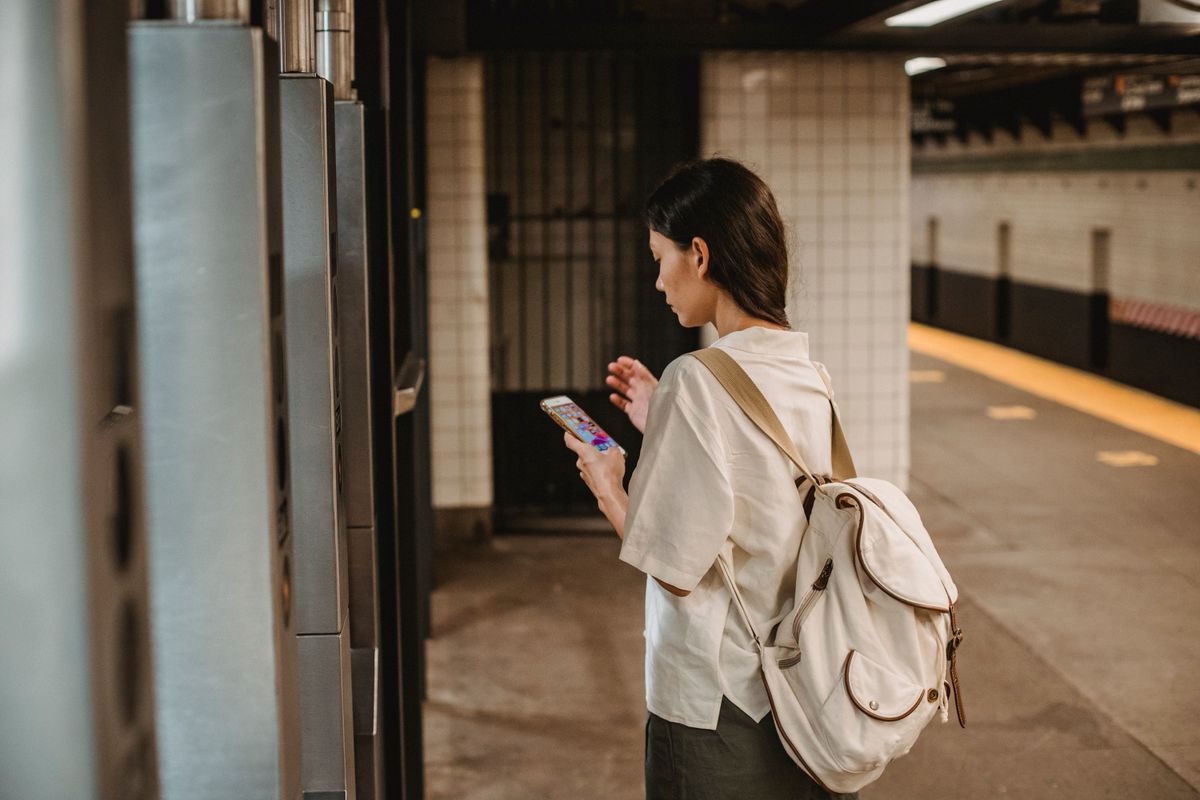
This is where dual eSIM really helps. Apple suggests using one eSIM for your home number and another for the place you're visiting (Apple: Use eSIM while traveling internationally). A simple setup:
- Travel eSIM: set it as your Cellular Data line and turn on Data Roaming for it.
- Home line: keep it on for calls, texts and security codes, but turn off Data Roaming on it to avoid charges. Your carrier's rates still apply if you take calls or send texts on it abroad.
- iMessage and FaceTime keep working on your home number while you use the travel eSIM for data (Apple).
With iOS 26 and later, your iPhone may ask you to turn on your travel eSIM when you arrive, and turn your home line back on when you return, depending on your country or region (Apple).
Install your travel eSIM on Wi-Fi shortly before you leave, so it's ready when you land. It sits next to your home line, so you don't lose your number. Here are data-only plans for three common trips.
Europe, USA and Asia plans shown · data-only eSIMs, no phone number · Find the eSIM for your destination
Need a second number for your trip to Europe, not just data? The My European eSIM from Bouygues Telecom comes with a French +33 number, with calls and SMS, so it can be your second line while your home number stays on.
FAQs
How many eSIMs can be used in an iPhone at the same time?
Two. On iPhone 13 and later, both can be eSIMs. On iPhone XS, XR, 11 and 12 models, you can use one eSIM plus one physical SIM. Only one line uses mobile data at a time.
How many eSIMs can I store on my iPhone?
Apple says you can manage eight or more eSIMs on an iPhone. Only two can be active at once. The rest stay saved and switched off.
Can I have three eSIMs active on my iPhone?
No. An iPhone runs two lines at the same time at most. To use a third eSIM, turn one of the active lines off in Settings > Cellular.
How many phone numbers can one eSIM have?
Usually one. Each eSIM holds one plan from one carrier. Data-only travel eSIMs have no number at all.
Can I use one eSIM on two iPhones?
No. An eSIM line works on one phone at a time. When you move a number to a new iPhone with eSIM Quick Transfer, the plan on your old iPhone is deactivated (Apple).
Does deleting an eSIM cancel my plan?
No. It only removes the eSIM from your phone. Contact your carrier to cancel the plan. To use that line again later, you'd need a new eSIM, so turn the line off instead if you're not sure.
Can I keep my home number while using a travel eSIM?
Yes. Keep your home line on for calls and texts and use the travel eSIM for data. Turn off Data Roaming on your home line so it doesn't use data abroad.