
To plan the perfect trip to Spain, start with Madrid and Barcelona, add Seville and Granada in Andalusia, and finish on the coast in Valencia, the Balearic Islands or the Canary Islands. Spring and autumn bring the mildest weather, high speed AVE trains link the big cities in about two to three hours, and visa-free visitors such as UK and US citizens can stay up to 90 days in any 180 day period. Below you get where to go, when to visit, how to get around, the entry rules and how to stay online.

Spain at a Glance
- Capital: Madrid
- Currency: euro (€), with Visa and Mastercard widely accepted
- Time zone: UTC+1 on the mainland and the Balearic Islands, UTC+0 in the Canary Islands, plus summer time
- Emergency number: 112 (free, with translation into several languages)
- Plugs: European round pin sockets, 220 volts, 50 Hz
- Entry: Schengen rules, 90 days in any 180 day period for visa-free visitors
Best Places to Visit in Spain
Spain is big, so pick two or three regions rather than trying to see everything in one trip. These are the places most first-timers build their holiday around.
Madrid

The capital is home to some of the most important art museums in the world: the Prado, the Reina Sofía and the Thyssen. Walk from the Royal Palace to the Plaza Mayor, the Puerta del Sol and the shops of Gran Vía, then slow down in Retiro Park. For tapas, head to La Latina.
Barcelona

Barcelona sits on the Mediterranean and is famous for Gaudí and its Art Nouveau architecture. The must-sees are the Sagrada Família, Park Güell, a stroll down Las Ramblas, the Boquería market and the city beaches. Book Sagrada Família tickets on the basilica's official website before you go.
Seville

Seville packs its big monuments into a few streets: the Giralda tower, the Cathedral (the largest Gothic church in Europe) and the Real Alcázar palace. Leave time for the huge Plaza de España, María Luisa Park and an evening of tapas in Triana.
Granada

At the foot of the Sierra Nevada, Granada is the home of the Alhambra and the Generalife, which are a World Heritage Site together with the old Albaicín quarter. Alhambra tickets are personal, so bring the ID you booked with, and the Nasrid Palaces are entered at a fixed time slot. Buy them in advance on the official Alhambra website.
Valencia

Valencia mixes an old town with the futuristic City of Arts and Sciences, plus Mediterranean beaches. Try a real paella, climb the 207 steps of the Miguelete tower and visit the Central Market. If you can, go around 19 March for the Fallas festival.
Balearic Islands
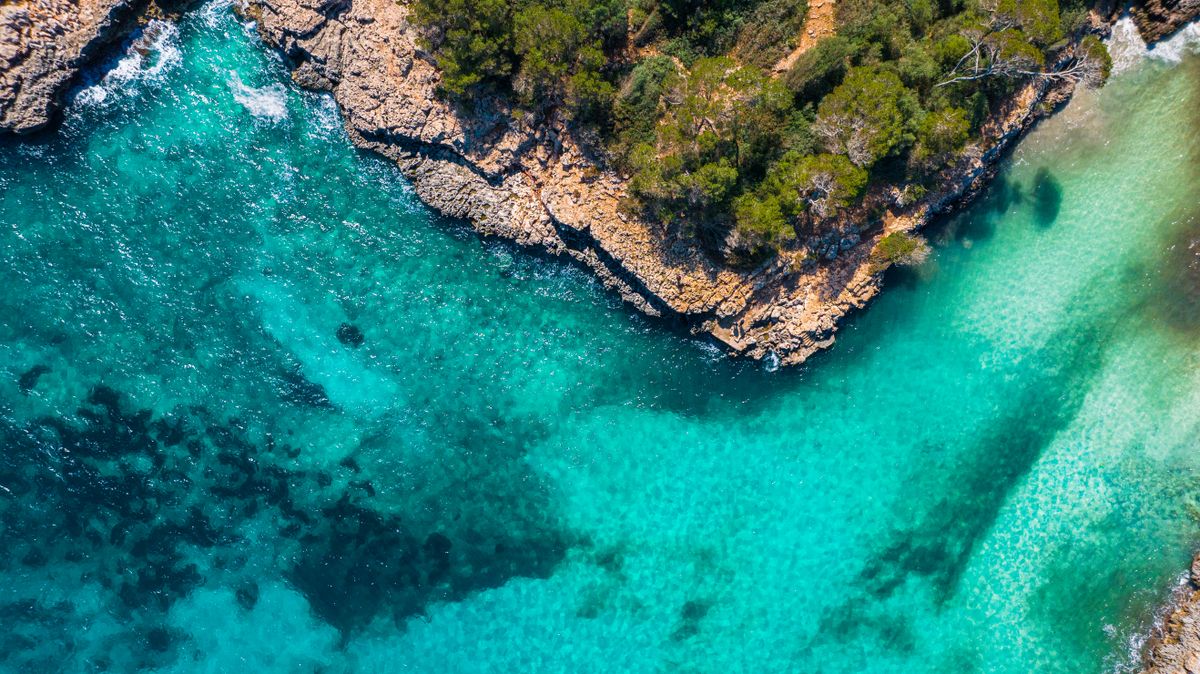
Mallorca and Ibiza are the two largest islands. On Mallorca, see Palma and the Serra de Tramuntana mountains. Ibiza is a UNESCO World Heritage site and is famous for its nightlife, while Menorca and Formentera are quieter.
Canary Islands

The Canary Islands offer mild weather all year, four national parks and great beaches. Highlights include the volcanic scenery of Lanzarote, the dunes of Fuerteventura and Gran Canaria, and the Carnival in Santa Cruz de Tenerife in February. Remember the islands are one hour behind mainland Spain.
Want more ideas for Europe? See our best cities to visit in Europe, the best islands in Europe or our 14 day Europe itinerary.
Best Time to Visit Spain
Spain's tourist board says any time of year is a good time to visit, but the mildest temperatures come in spring (April to June) and autumn (September to October), when you can be outdoors almost all day.
- Summer: hot inland. Madrid averages 30°C highs from July to September.
- Spring and autumn: best for city breaks and walking, with Madrid around 23°C from April to June.
- Winter: head to the Canary Islands, where Las Palmas averages 21°C highs from January to March.
Book accommodation well in advance if you travel during a big festival such as Easter week (Semana Santa) or San Fermín.
What Time Is It in Spain?
Mainland Spain and the Balearic Islands use UTC+1, and the Canary Islands use UTC+0, one hour behind. Clocks go forward one hour on the last weekend of March and back one hour on the last weekend of October. That means mainland Spain is usually one hour ahead of the UK, while the Canary Islands share UK time.
Spain also eats late. Restaurants usually serve lunch between 13:00 and 16:00 and dinner between 20:00 and 23:30. Shops often open from 10:00 to 21:00, though some close between 14:00 and 17:00, especially in summer.
Spain Entry Requirements
Spain is in the Schengen area. If you do not need a visa, you can stay up to 90 days in any 180 day period, and time spent in other Schengen countries counts towards it.
- British passports: according to GOV.UK, your passport must be issued less than 10 years before you arrive and valid for at least 3 months after the day you plan to leave the Schengen area. Border staff may ask for a return ticket, travel insurance, proof of accommodation and enough money for your stay.
- Entry/Exit System (EES): the EU's new border system has been fully running across Schengen since 10 April 2026. Non-EU travellers register their passport, fingerprints and photo at the border, and registration is free. Read our EES guide.
- ETIAS: the European Commission says ETIAS is scheduled to start in the last quarter of 2026, with a fee of EUR 20 (under 18s and over 70s are exempt from the fee). Once it runs, visa-free visitors such as UK and US citizens will need it before travelling. Check our ETIAS guide for the latest.
- Visa nationals: if your passport needs a Schengen visa, apply before you travel. You then do not need ETIAS.
Rules change, so check the official sources before you book.
How to Get Around Spain
Spain's main international airports include Adolfo Suárez Madrid-Barajas, Josep Tarradellas Barcelona-El Prat, Málaga-Costa del Sol and Palma de Mallorca. Once you arrive, you have three good options.
- High speed train (AVE): Madrid to Barcelona takes about 2 hours 30 minutes, Madrid to Seville about 2 hours 30 minutes and Madrid to Valencia about 1 hour 40 minutes. Book with Renfe.
- Domestic flights: under two hours between most cities, but about 2 hours 50 minutes from Madrid to the Canary Islands.
- Car hire: handy on the Balearic and Canary Islands. Ferries also link the islands.
In the cities, the historic centres are easy to walk, and big cities have metro, train and bus networks. Check metro hours, since only some cities run all night on certain days. Use only licensed taxis and keep your destination address handy.
Practical Tips for Spain
- Money: the euro is the only currency usually accepted. Withdraw cash from bank ATMs, and note that some places ask for a minimum spend of around €10 to pay by card. See how to avoid international ATM fees.
- Tipping: not required, as service is included, but leaving 5 to 10% in bars, restaurants, hotels and taxis is common.
- Safety: Spain is a popular, well-visited country, but watch out for pickpockets, who often work in teams in crowds and at airports. Call 112 in an emergency, or use the free AlertCops app to contact the police.
- Health: UK travellers need a GHIC or EHIC for state healthcare, but it does not replace travel insurance.
- Language: a few words help: hola (hello), gracias (thank you), por favor (please), ayuda (help).
How to Stay Connected in Spain
If your phone plan is from an EU country, you can use it in Spain at your normal rate. If it is from outside the EU, data roaming usually costs extra, depending on your operator. Free Wi-Fi is common in hotels, cafés and restaurants, and Spain has wide 5G coverage.
The simplest option is a Spain eSIM. You install it before you fly, it connects when you land, and you keep your normal SIM for calls and texts. Our Spain eSIMs are data-only, so use WhatsApp or other apps to call. A 7 day plan works for a city break, 15 days covers a two week holiday, and 30 days suits a longer trip or heavy use.
Not sure which plan fits? Read our best eSIM for Spain guide, compare eSIM providers in Spain, or see all Spain eSIM plans. New to eSIMs? Learn how to install an eSIM and how to use an eSIM in Europe. Travelling further? Browse all destinations. Looking for your next trip? See our Japan trip guide and Switzerland trip guide.
FAQ
What is the best time to visit Spain?
Spring (April to June) and autumn (September to October) have the mildest weather for sightseeing. Summer is hot inland, and winter is a good time for the Canary Islands.
What time is it in Spain compared to the UK?
Mainland Spain and the Balearic Islands are usually one hour ahead of the UK. The Canary Islands are on the same time as the UK.
Do I need a visa to visit Spain?
Visa-free visitors, including UK and US citizens, can stay up to 90 days in any 180 day period. If your passport needs a Schengen visa, apply before you travel. Once ETIAS starts, visa-free visitors will need that travel authorisation before they travel.
Do you tip in Spain?
Tipping is not required because service is included, but 5 to 10% is common in bars, restaurants, hotels and taxis.
How do I get mobile data in Spain?
EU phone plans work at the normal rate. Travellers from outside the EU can avoid roaming charges with a data-only Spain eSIM, installed before the trip.