
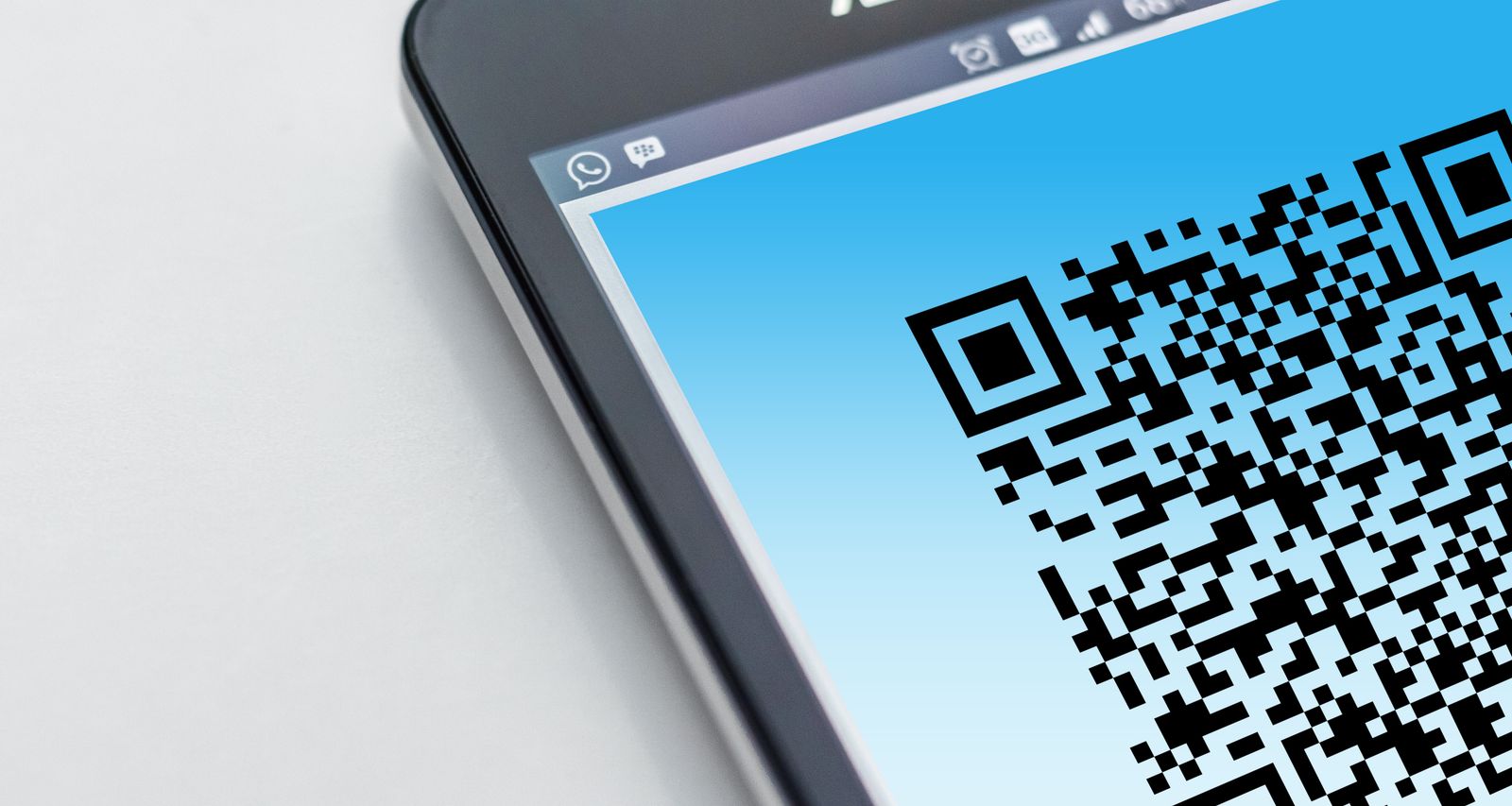
You get an eSIM QR code from the carrier or provider that sells you the plan. It usually comes by email, in the carrier's app or online account, on an activation card, or when you buy in a store. The code isn't stored on your phone, so you won't find it in your settings. Big US carriers like AT&T, Verizon and T-Mobile often skip the QR code and install your eSIM with a prompt, their app or eSIM Quick Transfer. This guide shows where to get your carrier QR code, how to scan it on iPhone and Android, and what to do if you can't scan it.
Where do you get a QR code from your carrier?
A carrier QR code is a link to your eSIM. When you scan it, your phone knows where to download your plan from. Here is where you'll usually find it:
- In an email after you buy a plan or a new line. Travel eSIM providers such as SimOptions send it this way.
- In the carrier's app or online account, often in the section where you manage your SIM or device.
- On an activation card that you pick up in a store or get by mail.
- In a store, if you buy your plan or phone there.
- From customer support, if your phone asks for a QR code and you don't have one.
Never got one? Ask your carrier for an eSIM QR code for your phone. They may ask for your phone's EID. Dial *#06#: if you see an EID number, your phone supports eSIM (AT&T Support).
Do AT&T, Verizon and T-Mobile still give you a QR code?
Often they don't need to. All three support eSIM Carrier Activation and eSIM Quick Transfer on iPhone, plus other methods such as a QR code or their app (Apple: carriers that offer eSIM). Moving to a new iPhone? You can bring your number over from your old one with eSIM Quick Transfer, no QR code needed. Here is what each carrier says today.
AT&T
New iPhones and Android phones show a prompt to download your eSIM during setup. On an iPhone you can also open Settings > Cellular > Add eSIM. Google Pixel phones may need a QR code, and other Android phones use an eSIM activation card with a QR code from AT&T (AT&T: Get to know eSIM). Postpaid customers can get a new eSIM in their online account under Device options > Manage your SIM > Get a new eSIM. Prepaid customers scan the QR code on an activation card, which takes 3 to 7 business days to arrive by mail (AT&T Support).
Verizon
Verizon says iPhone 12 and newer don't need a QR code. Some Android phones do, and you get it during setup (Verizon: eSIM activation). In the My Verizon app you can move your number to an eSIM phone, or switch from a physical SIM to an eSIM, without scanning a QR code (Verizon: My Verizon app eSIM FAQs).
T-Mobile
T-Mobile phones prompt you to activate your eSIM during setup, or once you're on Wi-Fi. Existing customers can switch in the T-Life app under Account > your line > SIM transfer or activation. Turn off SIM Protection first, or you'll get an error. On some Android phones, such as Google Pixel, Motorola and TCL models, T-Mobile says to contact them if your phone asks for a QR code, and they'll email it to you (T-Mobile: SIM card & eSIM).
UScellular
UScellular is now part of T-Mobile (T-Mobile: UScellular customers). If you're moving your UScellular line to an eSIM, follow T-Mobile's steps above or ask T-Mobile for help. For other carriers, see our list of eSIM carriers in the USA.
How to scan the QR code from your carrier on iPhone
- Connect to Wi-Fi.
- Open Settings > Cellular (called Mobile Service in some countries).
- Tap Set Up Cellular, or Add eSIM if you already have a plan.
- Tap Use QR Code.
- Place the QR code from your carrier inside the frame. Your iPhone reads it on its own.
- Tap Continue and follow the steps. If you're asked for a confirmation code, enter the one your carrier gave you.
Setting up a new iPhone? Tap Use QR code on the Set Up Cellular screen. After setup, you can also scan the code with the Camera app and tap the Cellular Plan Detected notification (Apple: Set up eSIM on iPhone).
"Scan the QR code you get from your service provider": what it means
This message means your iPhone is ready to add an eSIM and needs the code from whoever sells you the plan. "Service provider" is your carrier, or a travel eSIM provider. Your iPhone can't create this code, so get it from them first (see above). No code? Ask your carrier whether they can activate your eSIM another way, through their app or a prompt on your phone.
QR code in an email on the same iPhone?
Your camera can't scan its own screen. On iOS 17.4 or later, open the email or web page, tap and hold the QR code, then tap Add eSIM (Apple). On older versions, open the email on a computer or another phone and scan it from there, or type the details in by hand (see below).

How to find and scan a carrier QR code on Android
There's no carrier QR code saved on your Android phone. Look for it in your email, your carrier's app or your online account, then scan it from the eSIM menu. Menu names vary by brand and Android version.
Samsung Galaxy
- Open Settings > Connections > SIM manager.
- Tap Add eSIM.
- Tap Scan QR code and scan the code from your carrier.
- Restart your phone to apply the eSIM.
If your carrier has already assigned a plan to your phone, your Galaxy can also find it without a QR code, or show an "eSIM ready" notification you can tap (Samsung: SIM cards for your Galaxy).
Google Pixel
- Open Settings > Network & internet > SIMs.
- Tap Add SIM, then Set up an eSIM.
- Follow the steps and scan the QR code when asked.
See Pixel Phone Help. On other Android phones, look in Settings under Network, Connections or Mobile for an option to add or download an eSIM.
Can't scan it? Enter the SM-DP+ address and activation code
An eSIM QR code holds the SM-DP+ address, which is the server that stores your eSIM, and an activation code. If the camera won't read the QR code, you can type these in instead. Your carrier usually gives you the activation code next to the QR code (AT&T: Set up an eSIM using a QR code or activation code).
- iPhone: Settings > Cellular > Add eSIM > Use QR Code, then tap Enter Details Manually.
- Samsung: in SIM manager, choose to add the plan with an activation code instead of a QR code (Samsung Support).
- Other Android phones: on the scan screen, look for a link to enter the code manually.
Type the details exactly as you got them. Step by step help: how to enter an eSIM code manually.
Is an eSIM QR code single-use?
Treat it as single-use. Once your QR code has installed your eSIM, don't count on using it again. Keep it private too: anyone who scans it before you could install your eSIM.
- Don't delete your eSIM unless you're sure. If you delete it by mistake, Apple says you need to contact your carrier to get the eSIM details again (Apple: Manage eSIM and SIM cards).
- Changing phones? Use eSIM Quick Transfer or your carrier's app, or ask your carrier for a new QR code. Don't rescan the old one.
- Travel eSIMs differ. Some plans can be installed again from the same QR code, others can't. SimOptions says it depends on the eSIM you bought (SimOptions FAQ).
How travel eSIMs send your QR code by email
With a travel eSIM there's no store to visit, so the QR code comes by email. At SimOptions you get an email with your QR code right after you buy. The activation code for manual setup is in the PDF attached to that email. Can't find it? Check your spam folder. You can also buy, install and manage your eSIM in the SimOptions app.
Visiting the US from abroad? A US eSIM from SimOptions is data-only and arrives by email, so you can install it before you land.
A few tips for a smooth install:
- Open the email on a second screen, or print it, so you can scan the code with your phone.
- Install on Wi-Fi, shortly before you fly. The validity of a SimOptions eSIM starts when it's downloaded and activated on your phone.
- On a dual SIM phone, keep your home line for calls and texts and use the travel eSIM for mobile data.
- Installed but no connection? See eSIM not working? Ways to fix it.

Flying from the US to Europe, Mexico or Canada? These data-only eSIMs also come by email with a QR code, so you can set them up at home before you leave.
Data-only eSIMs delivered by email · Europe · Mexico · Canada · Find the eSIM for your destination
FAQs
How do I get a QR code from my carrier?
Ask your carrier in its app, in your online account, by phone or in a store. Many carriers send it by email. Big US carriers often activate your eSIM without one, through a prompt on your phone or their app.
Where is the QR code from my carrier on my iPhone?
It isn't on your iPhone. The code comes from your carrier, usually by email or in their app.
How do I find my carrier QR code on Android?
Same answer: it's not stored on the phone. Check your email, your carrier's app or your online account. Then scan it from SIM manager > Add eSIM on Samsung or Network & internet > SIMs on Pixel.
Can I make my own eSIM QR code with a QR code generator?
No. Only your carrier or eSIM provider can create the eSIM behind the code. A QR code generator can only turn details you already have, like an SM-DP+ address and activation code, into an image.
Do I need an eSIM test QR code to check my phone?
No. Dial *#06#. If an EID number appears, your phone supports eSIM. Your phone also needs to be unlocked to use an eSIM from another carrier.
Can I use the same eSIM QR code on two phones?
No. An eSIM works on one phone at a time. To move it, use eSIM Quick Transfer, your carrier's app, or ask for a new QR code.
Do I need Wi-Fi to scan an eSIM QR code?
Your phone needs an internet connection to download the eSIM. Wi-Fi is the easiest, and AT&T and T-Mobile ask you to connect to Wi-Fi first.
What if my carrier QR code doesn't work?
Check that it hasn't been used already, that you're on Wi-Fi and that your phone is up to date. If it still fails, ask your carrier for a new code. More fixes: can't activate your eSIM?